Showing posts with label organ transplant survival. Show all posts

Monday, November 05, 2012

Heart transplant recipient 30-year survivor


Scots heart transplant survivor meets surgeon 30 years after being told op would keep him alive five more years


JOHN McCAFFERTY, now 70, was told he'd live five more years after the transplant in 1982 and revealed he believed the other 25 years have "been a bonus".
John McCafferty is the longest surviving heart transplant patient


John McCafferty is the longest surviving heart transplant patient
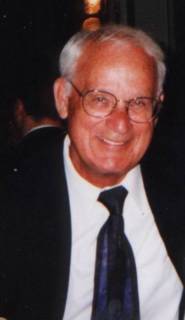
BRITAIN'S longest surviving heart transplant patient will mark the 30th anniversary of his operation by being reunited with the surgeon who carried it out.
John McCafferty, 70, was given five years to live after the op in 1982, but defied the odds and is still healthy.
He said: “The five years they gave me came and went and became 30. I have had 25 years as a bonus.”
This week, he will be attending a presentation at Harefield Hospital in Middlesex.
He will be joined by his surgeon, Sir Magdi Yacoub, who established heart transplantation in the UK and became the world’s top transplant surgeon.


Heart surgeon Sir Magdi Yacoub


John, from Shotts in Lanarkshire, was 39 and general secretary of the Defence Police Federation when he was diagnosed with dilated cardiomyopathy, a disease of the heart that causes it to become weakened and enlarged.

In 1991, John’s nephew, Steven Paterson, was diagnosed with the same condition and also had a transplant.
Now 35, he is also fit and healthy, and works as a radiographer at Hairmyres Hospital in Lanarkshire.
John was diagnosed after he complained of a racing heart. He was breathless and his weight shot up from 10 stone to 13 stone. Then, as he grew weaker, it plummeted to six stone.
John didn’t know it then, but doctors had given him only 10 days to live if he didn’t get a transplant.
He said: “I could barely breathe, I felt so bad and my eyes were sunken. I was told that I needed a heart transplant and it was a risk because so few had been carried out, but I would have tried anything.”
John, who had moved to England and now lives in Newport Pagnell, Buckinghamshire, had his op in October 1982 at Harefield – one of only two transplant units in the country at the time.
He was the 41st person to have a transplant there but the rest have died.
His donor was a young man from Essex who had died in a motorcycle accident.
John said: “I think about the person who gave me the gift of life. I do think of him and I will always be grateful. I had the perfect donor, his heart was a perfect match.” He has chosen to never contact the donor’s family, feeling that they had already been through one bereavement and if he died, they would grieve that they had lost yet another part of their son.
John’s son Iain was only 14 when his dad went through the operation at Harefield Hospital.
Not only did John get to see him grow up but he also has a grandson, Oliver, who is now 16.
John says he has refused to live his life against a ticking clock and put any timeline out of his head.
“Everyone has to die and when that is, is out of my hands,” he said. “Every morning I wake up and think to myself, ‘I have survived another day’.”
John is sure that he has made the most of his life and feels he has done things he never would have, had he not had a transplant.
Previously, he had been a heavy smoker, had a hectic professional, family and social life, and was far from fit and healthy.
After the operation, he took up swimming, ran half marathons and even participated in the British and European Transplant Games.
Now John finds that the normal aches and pains that come with old age have put a stop to his athleticism.
Nephew Steven said his uncle was still an inspiration and that every year he lives is good news for them both.
He said: “My uncle has been a benchmark for me. To see him carry on is so encouraging for me.
“You never know with our condition how long you have, so for him to have reached 30 years is inspirational.”
Surgeon Professor Yacoub, 76, said John’s 30-year anniversary was “wonderful”.
He said: “When I carried out the operation, I could never have dreamed that we’d be having this conversation 30 years on. My concern was for John’s immediate future.
“He is in many ways a role model because he is living proof of how successful this procedure can be. He has led a healthy lifestyle and should be an example to us all.”

Tuesday, October 25, 2011

Heart-transplant patient survival rates on the rise, Ottawa Heart Institute study shows


By Pauline Tam, The Ottawa Citizen
OTTAWA — A long-term study of Canadian heart-transplant patients has found that survival rates have improved markedly, with the biggest gains being made within the past 10 years.

The study, which followed 461 patients at the University of Ottawa Heart Institute since 1984, found that as a result of medical advances over the past decade, nine out of 10 transplant patients now live longer than eight years.

The younger the patient at the time of the transplant, the more likely they are to live longer, the study concluded.

Dr. Marc Ruel, the study’s author, attributed the gains to improved pre-surgical and post-operative care, including the advent of anti-coagulant drugs that permanently thin a patient’s blood, removing the risk of life-threatening clots.

Patients are also being kept alive longer due to the improved management of organ rejection and infection following surgery.

“It’s better surgery, better medicine, better team work, better organ procurement organizations. Just every single step is better understood and has been optimized,” said Ruel, who’s surgical director of the heart transplant program at the heart institute.

The results of the study were presented Monday at the Canadian Cardiovascular Congress in Vancouver.

Among the heart-institute patients who received transplants over the 25-year study period, nine out of 10 were still alive one year after they received a donated heart. An estimated eight out of 10 patients were alive five years later, six out of 10 a decade later and more than a third lived to see 20 years.

An international heart-transplant registry found that nearly seven out of 10 patients are still alive seven years after surgery, so the heart institute results compare favourably.

The oldest person to receive a donated heart during the study period was 74, and the youngest was three.

Transplants can be done after the age of 65 with good results, but doctors carefully screen patients to avoid those with significant kidney or liver illnesses that could compromise lifespan or quality of life, said Ruel.

Patients are considered candidates for transplant if they have exhausted all other available therapies and have less than a year to live. Nearly half of all transplant patients have heart failure due to some kind of genetic defect; the other half are patients who have survived multiple heart attacks and are living with end-stage heart disease.

An estimated 500,000 Canadians live with heart failure and 50,000 new patients are diagnosed each year. Last year, 167 Canadians received new hearts, while another 135 were on the waiting list.

Modern heart transplantation became available in 1980. Since then, survival rates have improved to the point where for every 10 transplants performed, two more patients survive longer than a decade, the study found.

The leading cause of death following a transplant is a condition called vasculopathy, a form of chronic rejection that narrows the blood vessels of the transplanted heart.

“You Have the Power to Donate Life – to become an organ and tissue donor Sign-up today!
Tell Your Loved Ones of Your Decision”
Australia, register at Australian Organ Donor Register
New Zealand, register at Organ Donation New Zealand
South Africa, http://www.odf.org.za/
United States, organdonor.gov
United Kingdom, register at NHS Organ Donor Register
Your generosity can save or enhance the lives of up to fifty people with heart, kidneys, liver, lungs, pancreas and small intestine transplants (see allotransplantation). One tissue donor can help by donating skin, corneas, bone, tendon, ligaments and heart valves
Has your life been saved by an organ transplant? "Pay it forward" and help spread the word about the need for organ donation - In the U.S. another person is added to the national transplant waiting list every 11 minutes and 18 people die each day waiting for an organ or tissue transplant. Organs can save lives, corneas renew vision, and tissue may help to restore someone's ability to walk, run or move freely without pain. Life Begins with You

Monday, August 08, 2011

Man Back on bike after cancer and liver transplant


A friend of mine who just celebrated the fifth anniversary of his double-lung transplant told me he was celebrating by entering a Triathlon race Sunday. His story and the one in this article are wonderful examples of how organ transplant and cancer survivors can transform their lives with new hope for living and the future.

(ABC 6 News) --

After a fall, getting back on your bike is a little bit difficult, but after cancer and a liver transplant you can only imagine the challenge.

George Bollinger's story of getting back to life and back on his bike is a tale of ups and downs. "It's a real roller coaster ride,"said Bollinger.

He was an active biker who peddled over 100 miles a week, but he was forced to put on the brakes after a routine blood donation showed that he was sick.

"I found out that I had a disease called PSC, and Cholangiocarcinoma, which is bile duct cancer." He was in need of a liver, but due to the cancer he was not healthy enough to go through surgery.

"To see someone who was very athletic and into doing a lot of things it's very hard to see them get and not do anything," said Carla Bollinger, George's wife of 37 years.

In 2004 after 4 years or radiation and chemotherapy, he was found cancer free and given a second chance at life when he received a new liver. "I wondered what life would be like afterwards," said Bollinger

George says his nurse Barb Braun never let him forget his active personality. "Barb was with me from the start." Braun wanted to help Bollinger get back on his bike seat again.

"He showed me a picture of when he was biking at home and said Barb am I ever going to get back to this."She decided a bike ride with her patient would be a great start.

"She challenged me last year to do a 100 mile bike ride and it kind of spurred me to get back on my bike,"said Bollinger.

Carla Bollinger says that at first her husband was unsure if he could do it, after being sick for so long. "He said well I might be able to get on my bike again I said the only way is to do it."

After a bit of training George Bollinger set out on a 60 mile bike ride around Rochester. Barb Braun is happy she was able to share it with him. "To really get to see the end result, and be part of this is truly a privilege."

For George this ride is not for himself, but for those still waiting for that second chance. "I wanted to send this message to them it's not about me this is for them."

Braun hopes others follow in his footsteps. "What we can do to support and inspire others to do the same."

Bollinger and Braun completed their 61 mile ride today in just over 5 hours. They are hoping they can do another ride like this again, if not annually.


“You Have the Power to Donate Life – Sign-up today! Tell Your Loved Ones of Your Decision”
United States, organdonor.gov
United Kingdom, register at NHS Organ Donor Register
Australia, register at Australian Organ Donor Register
Your generosity can save or enhance the lives of up to fifty people with heart, kidneys, liver, lungs, pancreas and small intestine transplants (see allotransplantation). One tissue donor can help by donating skin, corneas, bone, tendon, ligaments and heart valves
Has your life been saved by an organ transplant? "Pay it forward" and help spread the word about the need for organ donation - In the U.S. another person is added to the national transplant waiting list every 11 minutes and 18 people die each day waiting for an organ or tissue transplant. Organs can save lives, corneas renew vision, and tissue may help to restore someone's ability to walk, run or move freely without pain. Life Begins with You

Sunday, July 24, 2011

CF patient one of the longest-survivors of double-lung transplant

Surviving A Double-Lung Transplant: 'Life Is Good'

By NPR staff NPR Morning Edition
As a child, Howell Graham was diagnosed with cystic fibrosis, a genetic disease that often impairs lung function. By his late 20s, Howell would lose his breath doing things as routine as brushing his teeth.
So he underwent a risky operation — in 1990, he had a double lung transplant. And today, Howell, 49, is one of the longest-surviving recipients of that surgery. Recently, Howell and his mother, Nan, talked about a few moments when it seemed like he might not make it.
"I remember waking up from the surgery being on the vent [a ventilator], and seeing this absolutely beautiful brunette nurse," Howell says. "She held my hand her entire shift."
As he recovered, Howell drifted in and out of consciousness. And the next time he woke up, the hospital shifts had changed.
Then, he recalls, "a male nurse came in — this big burly dude," as his mother laughs. "And I was not happy at all."
Howell could not yet speak, as the ventilator helped him breathe. But he had a pen and paper.
"I just was writing notes like, 'Get him the heck out of here,' and 'I don't want this guy. Get me the girl back,'" he says.
"Lots of cursing," Nan remembers. "Lots of cursing."
"Lots of cursing," Howell agrees. "And my dad was tearing up the notes, because he was scared the male nurse would find the notes and kill me. So he spent his time intercepting my hate notes."
"Which is kind of understandable," Nan says.
After a month, Howell was able to leave the hospital.
"And when you got home, things were going well," Nan says.
"Well, things were going fantastic," Howell says.
His recovery was going so well that Howell took his father's 17-foot boat out — "thinking I knew what I was doing," he says.
"I ended up jumping out of the boat. And the boat got away from me, and it's too far to swim. And I really thought I was going to drown."
"Six months out of a double lung transplant," his mother says.
Howell says he was worried — but not just about possibly drowning.
"The first thing that popped in my mind was Dr. Egan, who's kind of a little fireball," he says, "how mad he was going to be that he had given me this transplant — and I blew it just being stupid."
"You said, 'He would have killed me!'" Nan remembers. "And I said, 'He would have had to get in line.' Your father and I would have been the first in line to kill you for this. We worked 28 years; he worked 12 hours."
"Yeah," Howell says.
After his surgery, Howell overcame a ruptured appendix; he is also a colon cancer survivor.
And more than 20 years after receiving his transplant, Howell says, "These are my lungs. And it's pretty amazing to have made it that far out. I've just been a lucky person."
"Life is good," Nan says.
"Life is good," Howell agrees.
Listen to the audio produced for Morning Edition by Nadia Reiman.

“You Have the Power to Donate Life – Sign-up today!
Tell Your Loved Ones of Your Decision”
United States, organdonor.gov
United Kingdom, register at NHS Organ Donor Register
Australia, register at Australian Organ Donor Register
Your generosity can save or enhance the lives of up to fifty people with heart, kidneys, liver, lungs, pancreas and small intestine transplants (see allotransplantation). One tissue donor can help by donating skin, corneas, bone, tendon, ligaments and heart valves

Has your life been saved by an organ transplant? "Pay it forward" and help spread the word about the need for organ donation - In the U.S. another person is added to the national transplant waiting list every 11 minutes and 18 people die each day waiting for an organ or tissue transplant. Organs can save lives, corneas renew vision, and tissue may help to restore someone's ability to walk, run or move freely without pain. Life Begins with You

Wednesday, May 25, 2011

Heart/Lung Transplant Recipient Celebrates 24 Years With New Organs

I apologize for the lack of posting during the past few days. Google has had issues with blogger which prevented many users from accessing their blogs. The problem now seems to be fixed for most users.


'Give someone life and hope by being a donor'


'Give someone life and  hope by being a donor'

By Tom Bevan www.thisisexeter.co.uk
THROUGHOUT his childhood John Mordue's prognosis was grim, yet he continually defied the odds and lived long enough to become one of the country's first heart and lung transplant patients in his 20s.

Nearly a quarter of a century later he has lived a full and happy life and says he cherishes every day spent with his family.

"I don't play the lottery as I have already won it," the 49-year-old, of Pinhoe, said.

But he knows that others aren't as lucky.

That is why he has spoken today in support of the Echo's Lifesavers campaign that is encouraging anyone who would be willing to accept a transplant to sign up to the organ donor register and consider giving one.

He said: "I always think about how lucky I am and I have beaten the odds throughout my life. When I was born they did not expect me to go to school. In the 1960s the treatment was very poor and the prognosis for children with cystic fibrosis was mortality.

"When I made it to a toddler they didn't expect me to make it to secondary school.

"Then they said I would die as a young man. If I had not had the transplant I would have been dead by 26 or 27 but I just kept hanging in there."

John was a frequent patient at the Royal Brompton Hospital in London and at the time of being offered the transplant had been told there was no further treatment available.

Describing his quality of life at the time he said: "You adapt and get used to it but don't really see the problems that other people do. Things were really tough in hindsight. It took ages to get dressed and having a bath was a bit of a nightmare."

John waited over a year for a match to become available. The date was November 18, 1987, and it was a night he will never forget.

It was in the days before mobile phones and John carried a pager with him wherever he went.

He said: "I remember poignantly and vividly that this was the night of the Kings Cross fire that killed 31 people.

"I had no change for the phone box and was in a mild panic to try to get some change from someone. I then went back home and waited.

"There were no ambulances available in the whole of London so one got sent from Cambridge. As I was waiting we were getting news of this horrible tragedy.

"While I was waiting for something that would give me the gift of life, there were families all across London being told they had lost a loved one. It really brought home to me the cost of a new life."

John was 26 at the time and described the initial improvement as "slow but steady."

He said: "I was out just before Christmas, but it took nearly a year for me to get fit. Previously I had not been able to walk and had no real muscle in my legs. My breathing was now fine but it was the rest of my body I had to sort out.

"If I had not had the transplant I would have died and would not have had the life and enjoyed all the things I have done in the last 20 years.

"I would not have got married, gone to university or had two wonderful boys.

"It is very hard to put into words and it is very brave of the donor family to give their consent. In such a very traumatic time for them and to do something so unselfish and think of someone else is truly remarkable and no amount of thanks will ever repay that.

"It has enabled me to have a life and give a life to my two boys, Jack and Liam."

John moved to Exeter with his wife shortly after the operation. As for the future he said he had no idea how long he would remain healthy. He said: "I was expecting five years and thought it was remarkable when I reached ten – and so did they.

"It has now been 24 years and I appreciate and bless every day. I hope it will be a lot longer but I will have to wait and see how long. I was one of the first in the country to have the heart and lung transplant so I have nothing really to compare it to.

"Life is uncertain. You never know if you or someone you love will in the future need a transplant to save their lives – so really think about being a donor. Give hope and life to the people that need it."

He said he had been following the campaign closely and paid tribute to the young CF patient Kirstie Mills whose plea for people to help give her a second chance of life inspired the campaign.

"She has done remarkably well and seems a very courageous girl and I am sure she would do very well with a transplant.

"Sadly there are more people waiting for donors than there are donors and that is why campaigns like this are so important. I don't play the lottery as in my opinion I have already won it. I just hope that my stories, and others like it, will encourage more people to sign up to be donors."

To find out more and to join the NHS Organ Donor Register: call 03001232323, go to www.organdonation.nhs.uk or text SAVE to 84118. If you sign up please give the marketing code for this campaign ECHO.

“You Have the Power to Save Lives – Register to be an organ and tissue donor & Tell Your Loved Ones of Your Decision”
Register to be a donor in Ontario at beadonor.ca
For other Canadian provinces click here
In the United States, be sure to find out how to register in your state at organdonor.gov (Go to top right to select your state)
In Great Britain, register at NHS Organ Donor Register
In Australia, register at Australian Organ Donor Register
Your generosity can save or enhance the lives of up to fifty people with heart, kidneys, liver, lungs, pancreas and small intestine transplants (see allotransplantation). One tissue donor can help by donating skin, corneas, bone, tendon, ligaments and heart valves

Has your life been saved by an organ transplant? "Pay it forward" and help spread the word about the need for organ donation - In the U.S. another person is added to the national transplant waiting list every 11 minutes and 18 people die each day waiting for an organ or tissue transplant. Organs can save lives, corneas renew vision, and tissue may help to restore someone's ability to walk, run or move freely without pain. Life Begins with You

Saturday, April 09, 2011

Twenty more years of life

Double lung transplant patient marking 20th anniversary of life-saving surgery

I recently had the 9-year assessment of my lung transplant in April, 2002 and feel really good about making it this far. Don Fagan's 20-year survival is certainly inspiring and I only hope my future will be as bright. (My assessment went well, showing that I remained stable from last year's assessment).

By J. T. McVeigh The Barrie Examiner
Sometimes, your hand is played for you, and occasionally you come up with four aces.

Don Fagan feels like that.

Twenty years ago he was lying in a hospital bed in Toronto near death.

Emphysema had literally taken his breath away. A smoker for most of his life, the cold chains of years of abuse tightened around his chest. Before going into hospital the then fifty-six year old couldn't walk 10 feet without having to sit down for a rest.

A relatively new surgery was introduced at the University of Toronto. It was part science-fiction and part medical miracle.

Organ transplant seemed like a dream, talked about as if about the future like flying cars and trips to Mars.

While flying cars are only creeping onto the science journals, and now a trip to Mars was well documented two years ago, implanting a donor's organs into a dying patient became a reality two dozen years ago.

Six years after the first successful double lung transplant it was Fagan's turn.

Friday, Fagan and his friends will be celebrating 20 years with the new lungs.

Twenty years that would have drifted off in April 1991 in a hospital bed in Toronto, but for the generosity of a grieving family in Ottawa who donated the lungs of their 22-year-old son struck down in his prime.

"I sit and I think of him sometimes." said a red-eyed Fagan "He would have been 42 by now, married, probably with kids if he hadn't..."

His voice drifts off on what might have been.

It is a conflict.

One dies, another lives.

"But there is something very beautiful and generous about that." said Fagan.

For three months Fagan struggled with recovery, sometimes feeling so weak he wondered if it was worth it.

"They kept us all together and it seemed every time we got together, another one was gone," said Fagan.

With the help of doctors and a psychologist, patients find that life does get better.

"Within six months I was swimming and going out to dances," recalls Fagan. "I dropped down to 120 pounds before the transplant and afterwards climbed to 220 before the doctors put their thumb down on that."

After recovery, Fagan became an advocate for organ and tissue donation.

He was part of a group that changed the organ donor card from being an addendum on a drivers licence, to a sign up on the Ontario Health Card obtained from Service Ontario offices.

And he met challenges, people who were spooked by the thought of giving up their organs, concerned that they were going to feel pain or even be harvested before the patient died.

"They can't, won't do anything until the person has died, doctors don't know where the organs come from, they don't order up the parts." he said.

"But you have to push, push them (medical staff) to make the donation, doctors won't.

Wearing a T-shirt with 'Don't take your organs to Heaven. Heaven knows we need them here.' Fagan is still moved to tears by the generosity of his donor's family.

Donors and recipients identities are kept anonymously, one doesn't know the name or the hometown either way, but there is correspondence allowed through the families and forwarded through the donor office.

"I wrote to them after a time, thanking them for what they had done." said Fagan. "No names or anything, they check to make sure you identity is off of the letter."

Taking a deep breath he remembers "They wrote back and said they hoped I would take good care of the lungs." His eyes reddening he whispered, "I think I have."

The week of April 17th is National Organ and Tissue donation awareness (in Canada), and it seems appropriate that Fagan celebrates his own transplant and birthday in the same month.

Friday, at Simcoe Terrace Retirement Centre on Donald Street, friends, guests and even the mayor are stopping by to celebrate with Fagan.

Ever the advocate, Fagan has invited everyone to join him at 2 p.m.

And if they have any questions about the donation or transplant program Fagan vows to steer them right.

"The celebration shouldn't just be for me, but for him (the donor) as well." said Fagan. "If it wasn't for him I wouldn't be here."

“You Have the Power to Save Lives – Register to be an organ and tissue donor & Tell Your Loved Ones of Your Decision”
Register to be a donor in Ontario at Trillium Gift of Life Network NEW for Ontario: recycleMe.org - Learn The Ins & Outs Of Organ And Tissue Donation. Register Today!
For other Canadian provinces click here
In the United States, be sure to find out how to register in your state at ShareYourLife.org or Download Donor Cards from OrganDonor.Gov
In Great Britain, register at NHS Organ Donor Register
In Australia, register at Australian Organ Donor Register
Your generosity can save or enhance the lives of up to fifty people with heart, kidneys, liver, lungs, pancreas and small intestine transplants (see allotransplantation). One tissue donor can help by donating skin, corneas, bone, tendon, ligaments and heart valves

Has your life been saved by an organ transplant? "Pay it forward" and help spread the word about the need for organ donation - In the U.S. another person is added to the national transplant waiting list every 11 minutes and 18 people die each day waiting for an organ or tissue transplant. Organs can save lives, corneas renew vision, and tissue may help to restore someone's ability to walk, run or move freely without pain. Life Begins with You

Friday, October 15, 2010

Springfield, Illinois man celebrates 25 years with transplanted heart

We are starting to see more and more stories about the improving long-term survival of organ transplant recipients and this is another inspiring and encouraging report for those of us who are waiting for a transplant or have already had one.

The prognosis for heart transplant patients following the transplant procedure has greatly increased over the past 20 years, and as of June 5, 2009, the survival rates were as follows.

  • 1 year: 88% (males), 77,2% (females)
  • 3 years: 79,3% (males), 77.2% (females)
  • 5 years: 73,1% (males), 67.4% (females)
Childhood heart defect prompted state organ donation registry
By Patrick Yeagle IllinoisTimes

For most people, taking second in a foot race would only be cause to try harder. For Ryan Louis of Springfield, it was a warning sign that would change his life.

“My mom asked me what happened, and I just said that I had gotten tired,” says the 32-year-old Louis, recalling a race that he ran near the end of kindergarten. “She had never heard me say that before; I was pretty hyperactive. But in her mother’s intuition, she said, ‘I think there’s something wrong with you.’ ”

She took him to several hospitals, where doctors discovered he had a heart defect that was expected to be fatal. His family set up a type of hospice environment in their home while trying to figure out what to do, until a neighbor suggested they visit Loyola University Medical Center in Chicago, which was experimenting with organ transplants in children at the time. Louis received a new heart at that hospital in 1985 at the age of seven. On Oct. 5, Louis celebrated his 25th year with a transplanted heart.

“I was the fifth-youngest in the world,” he says. “I can’t tell you how many of those survived, but it worked out pretty well for me.”

Louis says the knowledge gained by doctors from his transplant is used in organ transplants still today, but his influence reaches even further than that.

The neighbor who told Louis’s family about Loyola was none other than U.S. Rep. Tim Johnson of Champaign, who was a state representative at the time. Ryan Louis and his siblings were friends with Johnson’s own children, and Louis’s story prompted Johnson to push for changes in the state laws regarding organ donation.

“I saw Ryan as an example of why we needed to modernize and streamline our systems,” Johnson says. “His story individualized for me just how outdated our systems were.”

Because of that personal connection, Johnson helped pass bills to clarify eligibility for organ donation and outlaw the sale of body parts other than for research purposes. He also worked with then-Secretary of State George Ryan to create Illinois’ organ donor registry – the first state-run registry in the nation.

Louis remembers the disorganization and misunderstandings that existed before the registry.

“When I was in the hospital, there were kids dying left and right because there was nobody donating anything,” he says. “Nobody knew much about it or how to do it. People had the misconception that ‘If I’m on the table and they can use my organs, they’ll just let me die.’ It’s not like that at all, but back then there were a lot of horror stories about it.”

Johnson calls Louis’s story “heartwarming” because a family got to see their son “almost brought back to life.”

“Ryan’s family was and still is very dear to me,” he says. “His father (now deceased) was my best friend, and we (the families) still hang out whenever we can. My hope is that, through legislation and medical advances, we will allow heart transplants and other organ donations to continue to increase.”

Henry Haupt, spokesman for Secretary of State Jesse White’s office, which oversees the organ donor registry, says 5.4 million people have signed up as organ donors since Jan. 1, 2006, when regulations changed to allow Illinoisans to donate their tissues and organs without witnesses or their families’ consent, simply by indicating their wish to the Secretary of State’s office.

“I think it’s a wonderful testament to the generosity of Illinoisans,” Haupt says.

Ryan Louis says he lives life to the fullest because his late father inspired him to be strong and forego excuses. Louis does jujitsu, sings in two bands and is part-owner and manager of Hickory River Smokehouse in Springfield.

“One of the things that bugs me is people saying I’ve had a second chance,” he says. “Who hasn’t had two, three, even four chances at life? …Everybody has been given a second chance at some point. I’ve got a scar down my chest and medicine I take to remind me, but it happens to everybody, so when do you choose to live life?”

“You Have the Power to Save Lives – Register to be an organ and tissue donor & Tell Your Loved Ones of Your Decision”
Register to be a donor in Ontario at Trillium Gift of Life Network NEW for Ontario: recycleMe.org - Learn The Ins & Outs Of Organ And Tissue Donation. Register Today! For other Canadian provinces click here
In the United States, be sure to find out how to register in your state at ShareYourLife.org or Download Donor Cards from OrganDonor.Gov
In Great Britain, register at NHS Organ Donor Register
In Australia, register at Australian Organ Donor Register
Your generosity can save or enhance the lives of up to fifty people with heart, kidneys, liver, lungs, pancreas and small intestine transplants (see allotransplantation). One tissue donor can help by donating skin, corneas, bone, tendon, ligaments and heart valves

Has your life been saved by an organ transplant? "Pay it forward" and help spread the word about the need for organ donation - In the U.S. another person is added to the national transplant waiting list every 11 minutes and 18 people die each day waiting for an organ or tissue transplant. Organs can save lives, corneas renew vision, and tissue may help to restore someone's ability to walk, run or move freely without pain. Life Begins with You

Saturday, September 12, 2009

Longest lung transplant survivor at Toronto's Sick Kids Hospital doing well

Adam Kingz wasn't like other teens. He didn't whine about little things, he was just so pleased to be here

JOANNA FRKETICH
THE HAMILTON SPECTATOR

Smithville, Ontario
Adam Kingz is the longest living lung transplant survivor from Toronto's Sick Kids Hospital.

He's made it 10 years since that terrifying and hopeful day he got a new set of lungs on Aug. 23, 1999.

It's so rare, the 14-year-old from Smithville was only the third child Toronto's Hospital for Sick Children had ever performed a lung transplant on since the program began in 1995.

The other two have since died.

"Adam's beat the odds," said Dr. Melinda Solomon, a director in Sick Kids respiratory medicine program.

Equally impressive is that he's healthy. The 24-year-old artist lives a pretty typical life other than the osteoporosis he's developed from the drugs he must take for the rest of his life to make sure his body doesn't reject the lungs.

"He's done well," said Solomon. "A lot of people survive things but it doesn't mean they get to do everything. He has."

It's a list of ordinary milestones and moments that most would take for granted. But for Kingz each is winning a battle against the odds.

"I've always proved the doctors wrong in some way," he said listing off all the dire statistics he's been quoted over the years. "It's just something for me to beat."

Ask him about each year since the transplant and he'll tell you what personal mountain he climbed.

Year 1 he walked. He walked around his hospital room, his ward, Sick Kids, his house and eventually his neighborhood.

Until then, the primary pulmonary hypertension that was killing him left him feeling winded all the time. It's a rare blood vessel disorder of the lungs that puts so much stress on the heart it eventually fails. In the hospital, he could barely go the few steps from his bed to the bathroom. Anywhere farther required a wheelchair and a chaperone -- tough for a teen wanting independence.

The transplant gave him freedom along with life.

"I just walked," he said. "I took the stairs. I would run a bit to make myself tired and catch my breath and it would go away and I could breathe again."

Year 2 he went back to school. For the first time in three years, he could go to class like every other Grade 10 student and not have illness as an excuse for his performance. Some kids in the high school didn't even know he'd ever been sick.

He especially loved being in the middle of that "two minutes before class when the hallway is busy and hustling."

For so long, he'd had to avoid crowds for fear he'd catch some minor bug that could be deadly for him. Now, he went to the movies with his friends and had his first dates.

"I had a normal teenage life again," he said.

Except for one big difference. Kingz' attitude wasn't like most kids his age.

"I was happy to be alive," he said. "I didn't let normal things in a teen's life get to me because to me they weren't a big deal. I wasn't upset if someone didn't talk to me or if a teacher did something. I was very positive about life."

It was during Year 3 that Kingz spent the first night away from home that wasn't in a hospital.

Fittingly, it was a visit to Toronto. For years, he'd lived at Sick Kids as much if not more than home. But he'd never really seen the city itself.

Now, he was in Toronto performing a play with fellow students at a festival.

"It was like a whole other side of Toronto," he said. "I associated Toronto with being sick. But my friends and I walked around and went to shops. It was cool."

Year 4 he almost lost it all.

Kingz came as close to death as he has ever been when he caught the flu and it turned into pneumonia almost overnight in December 2002.

It was the first time, in all of the years he was sick, that an ambulance rushed him from his Smithville home lights and sirens blaring to Sick Kids in Toronto.

"They told me he was the sickest kid in Sick Kids at that moment," said his mom Arlene Vandervelde.

Doctors prepared her for the worst and said even if he got better, it would be a long recovery with no chance of going home before New Year's.

"I went home Christmas Eve," said Adam with a chuckle.

Year 5, he fell in love.

He met Teisha Sabourin while peer tutoring her class to make up for school he'd missed while sick with pneumonia.

"She had a big crush on me and I was totally clueless," admits Kingz.

A mutual friend finally urged him to ask her out. Their first date was on a Friday the 13th.

Neither of them had their driver's licence so her mom drove them to the mall. They ate in the food court and went to see a movie.

"It wasn't romantic, but how many first dates are in high school?" he says laughing at himself. "I was happy with her and things just kept going until we were that couple in school that everyone knew would end up together."

Kingz only worry was that Sabourin didn't know he was a transplant survivor.

"We were out boating with her dad and I took my shirt off and she saw the scar," he said. "I was nervous but she made herself clear that it didn't matter."

Triumphant Year 6 saw Kingz officially beat the odds by living more than five years past his transplant and graduated high school.

"None of us ever pictured me graduating high school," he says about family and friends who remember the sad graduation that had come before.

In his Grade 8 picture, the oxygen tubes helping to keep him alive are as visible as his gown and diploma. He'd barely been to his last year of school and it didn't feel like there was much to celebrate.

"With high school, it felt like the real thing," says Kingz.

Year 7 Kingz got a brand new start.

His family moved to a house he loved.

"I was sick in that other house," he said. "This was a fresh start for everything. I cut the lawn here, helped with the garden and shovelled the snow."

Kingz started designing tattoos. First, an angel for his mom and then another for himself. The family has always felt a guardian angel was out there somewhere watching out for them.

Now he has a list of friends waiting for him to design something for them.

"It's a way to express myself."

By Year 8, Kingz knew what he wanted most in life so he asked Sabourin to marry him.

"I wanted to be with her," he said. "I wanted to tell her I love her."

After asking her family's approval first, he took her to Niagara Falls just after Christmas 2006.

They walked by the falls, had their hands waxed together on Clifton Hill and got engaged.

"She cried and got all giggly and called her mom," he said.

Kingz admits they were young. He was 22 and Sabourin only 20. But they were ready and Kingz didn't want to waste time.

"If I want to do something, I just do it," he says. "I don't wait. I want to live for today."

Year 9, Kingz got brave enough to leave the country. For the first time, he was a plane ride away from a Canadian hospital. He spent a week in Cuba with Sabourin.

"We went to the beach and Teisha got really badly burned," he said. "Everything was so much fun."

Today is the sweetest milestone of them all. Kingz is getting married to Sabourin this afternoon, just weeks after celebrating Year 10.

Sick Kids doesn't even have odds on surviving to Year 10 because so few children have done it so far. The Guinness Book of World Records lists 16 years, 307 days as the longest surviving single lung transplant recipient. But that was an adult and Kingz had a double lung transplant.

Kingz plans to beat them all.

"I've always wanted to live a long life," he says. "I want to live long enough to break records just for being alive."

“You Have the Power to Save Lives – Sign Your Donor Card & Tell Your Loved Ones of Your Decision”

Register to be a donor in Ontario or Download Donor Cards from Trillium Gift of Life Network. NEW for Ontario: recycleMe.org - Learn The Ins & Outs Of Organ And Tissue Donation. Register Today! For other Canadian provinces click here

In the United States, be sure to find out how to register in your state at ShareYourLife.org or Download Donor Cards from OrganDonor.Gov

In Great Britain, register at NHS Organ Donor Register

In Australia, register at Australian Organ Donor Register

Your generosity can save up to eight lives with heart, kidneys, liver, lungs, pancreas and small intestine transplants. One tissue donor can help up to 100 other people by donating skin, corneas, bone, tendon, ligaments and heart valves

Has your life been saved by an organ transplant? "Pay it forward" and help spread the word about the need for organ donation - In the U.S. another person is added to the national transplant waiting list every 11 minutes and 18 people die each day waiting for an organ transplant.