Showing posts with label Heart/Lung Transplant. Show all posts

Friday, July 08, 2011

Europe's first successful heart/lung transplant surgeon retires

Best wishes go to Professor John Wallwork on his retirement. The thousands of patients whose lives were saved will be forever thankful and grateful to Prof Wallwork and his pioneering colleagues around the world who raised the bar for organ transplantation.

huntspost.co.uk

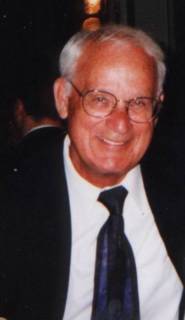
Prof John Wallwork

A PAPWORTH surgeon who hit the headlines in 1984 after conducting Europe’s first successful heart and lung transplant is retiring on Friday after granting thousands of patients the gift of life.

The longest surviving combined heart and lung transplant patient is cystic fibrosis sufferer Julie Bennett who Prof Wallwork operated on 26 years ago.

Professor John Wallwork leaves Papworth Hospital after securing the specialist heart and lung hospital’s place in history books and helping make it the country’s main heart and lung transplant centre.

After completing his surgical training in Edinburgh, Prof Wallwork trained with Prof Norman Shumway of Stanford University, California - dubbed the ‘father of heart transplantation’ - in the United States.

The world’s first successful heart and lung transplant was performed by Professor Bruce Reitz in 1981 at Stanford University’s Medical Centre, assisted by Prof Wallwork and Prof Shumway.

Prof Wallwork then carried out Europe’s first successful heart and lung transplant at Papworth Hospital in 1984 before setting up a children’s service for the procedure at London’s Great Ormond Street Hospital.

Together with Addenbrooke’s surgeon Prof Sir Roy Calne, Prof Wallwork carried out the world’s first heart, lung and liver transplant at Papworth in 1986.

At a time when he had a young family, Prof Wallwork and two other surgeons were available night and day, in the hope of receiving a call that could bring years of life to somebody awaiting an organ transplant.

And as organs tend to be harvested after a hospital’s daily surgery list is complete, this meant working round the clock.

Prof Wallwork would wait for the organ and recipient to arrive at Papworth - often by helicopter onto the village’s cricket pitch - so that transplant surgery could be undertaken as a matter of urgency and ideally within four hours of the donor organ being harvested.

He said: “By their very nature transplant operations are impossible to plan because you don’t know when an organ will become available.

“And you forget all this started before mobile phones were available.

“The 1980s were very exciting times as we were always developing new ideas and techniques.

“In the early years of transplantation all the patients were in the news but now you find they are going back and living normal lives.

“And it is good for them not being celebrities.

“The International Society for Heart and Lung Transplantation started in 1981, initially attended by a small number of delegates. There are now 2,000 delegates attending this prestigious meeting each year.”

Both Prof Wallwork and Sir Terence English, who carried out the first successful heart transplant at Papworth Hospital in 1979, are past presidents.

The longest surviving combined heart and lung transplant patient is cystic fibrosis sufferer Julie Bennett who Prof Wallwork operated on 26 years ago.

Like all transplant patients at Papworth, Ms Bennett has had regular appointments at the hospital ever since, despite having to travel from her home in Chepstow in the Welsh borders.

She said: “When I had my transplant in 1985 it really was groundbreaking surgery and I never dreamt that I would be here 26 years later to see John Wallwork retire.

“I never thought that he would leave Papworth before I did.

“Words cannot describe the gratitude that I feel. He and the team at Papworth Hospital have really become like my second family.

“I will miss John immensely but I do wish him a long and happy retirement.”

Prof Wallwork said he, in turn, was surprised to be retiring while Papworth Hospital is still located in the village.

The specialist hospital is due to move onto the biomedical campus at the Addenbrooke’s Hospital site in Cambridge in 2015.

Prof Wallwork reflected: “When I came here they told me we would be moving within three years and it’s nearly 30 years on now.

“I would like to see Papworth Hospital retain its ethos. Its name is important but it is the people who work in the hospital that make it special, for the patients of today and for the patients who will be treated in the new Papworth Hospital.”

More than 2,000 open heart surgery procedures are undertaken at Papworth Hospital each year and up to 100 heart and lung transplant operations are performed.

More than half of patients survive more than 10 years after transplant and have a marked improvement in their quality of life following surgery.

Prof Wallwork conducted his final operation earlier this month.

In addition to pioneering heart and lung transplant surgery, he has conducted research into why organs are rejected as well as undertaking trials into how animal organs can be genetically modified for human use.

He has also trained surgeons across the globe in addition to those in the UK.

When asked of his retirement plans, Prof Wallwork said he was keen to promote the planned research institute linked to the new hospital building where his legacy of research can be developed.

“Our health service can only provide up-to-date first-class care if it is allowed also to be innovative which is why the institute is going to be so important,” he said.

“You Have the Power to Donate Life – Sign-up today!
Tell Your Loved Ones of Your Decision”
United States, organdonor.gov (Select your state - top right)
United Kingdom, register at NHS Organ Donor Register
Australia, register at Australian Organ Donor Register
Your generosity can save or enhance the lives of up to fifty people with heart, kidneys, liver, lungs, pancreas and small intestine transplants (see allotransplantation). One tissue donor can help by donating skin, corneas, bone, tendon, ligaments and heart valves

Has your life been saved by an organ transplant? "Pay it forward" and help spread the word about the need for organ donation - In the U.S. another person is added to the national transplant waiting list every 11 minutes and 18 people die each day waiting for an organ or tissue transplant. Organs can save lives, corneas renew vision, and tissue may help to restore someone's ability to walk, run or move freely without pain. Life Begins with You

Wednesday, May 25, 2011

Heart/Lung Transplant Recipient Celebrates 24 Years With New Organs

I apologize for the lack of posting during the past few days. Google has had issues with blogger which prevented many users from accessing their blogs. The problem now seems to be fixed for most users.


'Give someone life and hope by being a donor'


'Give someone life and  hope by being a donor'

By Tom Bevan www.thisisexeter.co.uk
THROUGHOUT his childhood John Mordue's prognosis was grim, yet he continually defied the odds and lived long enough to become one of the country's first heart and lung transplant patients in his 20s.

Nearly a quarter of a century later he has lived a full and happy life and says he cherishes every day spent with his family.

"I don't play the lottery as I have already won it," the 49-year-old, of Pinhoe, said.

But he knows that others aren't as lucky.

That is why he has spoken today in support of the Echo's Lifesavers campaign that is encouraging anyone who would be willing to accept a transplant to sign up to the organ donor register and consider giving one.

He said: "I always think about how lucky I am and I have beaten the odds throughout my life. When I was born they did not expect me to go to school. In the 1960s the treatment was very poor and the prognosis for children with cystic fibrosis was mortality.

"When I made it to a toddler they didn't expect me to make it to secondary school.

"Then they said I would die as a young man. If I had not had the transplant I would have been dead by 26 or 27 but I just kept hanging in there."

John was a frequent patient at the Royal Brompton Hospital in London and at the time of being offered the transplant had been told there was no further treatment available.

Describing his quality of life at the time he said: "You adapt and get used to it but don't really see the problems that other people do. Things were really tough in hindsight. It took ages to get dressed and having a bath was a bit of a nightmare."

John waited over a year for a match to become available. The date was November 18, 1987, and it was a night he will never forget.

It was in the days before mobile phones and John carried a pager with him wherever he went.

He said: "I remember poignantly and vividly that this was the night of the Kings Cross fire that killed 31 people.

"I had no change for the phone box and was in a mild panic to try to get some change from someone. I then went back home and waited.

"There were no ambulances available in the whole of London so one got sent from Cambridge. As I was waiting we were getting news of this horrible tragedy.

"While I was waiting for something that would give me the gift of life, there were families all across London being told they had lost a loved one. It really brought home to me the cost of a new life."

John was 26 at the time and described the initial improvement as "slow but steady."

He said: "I was out just before Christmas, but it took nearly a year for me to get fit. Previously I had not been able to walk and had no real muscle in my legs. My breathing was now fine but it was the rest of my body I had to sort out.

"If I had not had the transplant I would have died and would not have had the life and enjoyed all the things I have done in the last 20 years.

"I would not have got married, gone to university or had two wonderful boys.

"It is very hard to put into words and it is very brave of the donor family to give their consent. In such a very traumatic time for them and to do something so unselfish and think of someone else is truly remarkable and no amount of thanks will ever repay that.

"It has enabled me to have a life and give a life to my two boys, Jack and Liam."

John moved to Exeter with his wife shortly after the operation. As for the future he said he had no idea how long he would remain healthy. He said: "I was expecting five years and thought it was remarkable when I reached ten – and so did they.

"It has now been 24 years and I appreciate and bless every day. I hope it will be a lot longer but I will have to wait and see how long. I was one of the first in the country to have the heart and lung transplant so I have nothing really to compare it to.

"Life is uncertain. You never know if you or someone you love will in the future need a transplant to save their lives – so really think about being a donor. Give hope and life to the people that need it."

He said he had been following the campaign closely and paid tribute to the young CF patient Kirstie Mills whose plea for people to help give her a second chance of life inspired the campaign.

"She has done remarkably well and seems a very courageous girl and I am sure she would do very well with a transplant.

"Sadly there are more people waiting for donors than there are donors and that is why campaigns like this are so important. I don't play the lottery as in my opinion I have already won it. I just hope that my stories, and others like it, will encourage more people to sign up to be donors."

To find out more and to join the NHS Organ Donor Register: call 03001232323, go to www.organdonation.nhs.uk or text SAVE to 84118. If you sign up please give the marketing code for this campaign ECHO.

“You Have the Power to Save Lives – Register to be an organ and tissue donor & Tell Your Loved Ones of Your Decision”
Register to be a donor in Ontario at beadonor.ca
For other Canadian provinces click here
In the United States, be sure to find out how to register in your state at organdonor.gov (Go to top right to select your state)
In Great Britain, register at NHS Organ Donor Register
In Australia, register at Australian Organ Donor Register
Your generosity can save or enhance the lives of up to fifty people with heart, kidneys, liver, lungs, pancreas and small intestine transplants (see allotransplantation). One tissue donor can help by donating skin, corneas, bone, tendon, ligaments and heart valves

Has your life been saved by an organ transplant? "Pay it forward" and help spread the word about the need for organ donation - In the U.S. another person is added to the national transplant waiting list every 11 minutes and 18 people die each day waiting for an organ or tissue transplant. Organs can save lives, corneas renew vision, and tissue may help to restore someone's ability to walk, run or move freely without pain. Life Begins with You