Showing posts with label Live organ donation. Show all posts

Monday, September 13, 2010

Daughter donates kidney to save father's life

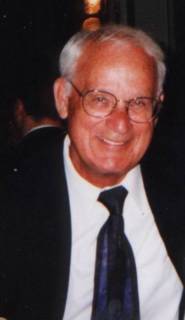
Abby Vara, 24, donated one of her kidneys to her dad Erampamoothy Varaprasatham, 64, on Father's Day last year. The father-daughter team are now spreading the message about organ donation.
Photograph by: Julie Oliver, The Ottawa Citizen

Abby Vara's decision to donate a kidney to her father saved his life

By Chelsey Burnside The Ottawa Citizen

FUNDRAISING WALK
Abby Vara is this year's ambassador of Give the Gift of Life Walk, which took place on Sept. 12, 10 a.m., at Andrew Haydon Park. The walk, held by the Kidney Foundation of Canada, raises funds for research for the prevention of kidney disease. Visit http://www.kidney.on.ca for more details.

On Father's Day 2009, Abby Vara saved her dad's life.

Though her five-foot-one frame could never have carried him out of a burning building, and the closest thing to a weapon involved was a surgical scalpel, Abby's decision to donate one of her kidneys to her father was nothing short of heroic.

"He didn't have a choice in the matter," says Abby, 24. "People would always ask me, 'Are you sure? Are you sure? Are you sure?' After awhile they got sick of asking, because I would always say 'Absolutely.' I didn't have a doubt in my mind."

Her father Erampamoothy Varaprasatham, known to friends and family as "Vara," has been affected by a rare, yet-to-be-diagnosed neurological disorder since 1993. His health has steadily deteriorated, a downward spiral of strokes, angina, epilepsy, gout, diabetes, and finally kidney failure -- all because of a virus that managed to outsmart medical professionals.

"I lost my speech, I lost my memories," says Varaprasatham, who practised medicine until his onset of ailments. "They sent me home to die."

But no one, especially the close-knit Sri Lankan family of five, was ready to sit back and watch him surrender to the disease. Offers began flooding in from friends, family and good samaritans willing to donate their organs in order to help Varaprasatham, who was on a four-year waiting list for a deceased donor kidney while struggling through debilitating hemodialysis treatments.

"It was really difficult to watch him suffer from kidney failure," says Abby, her usual bubbly voice deadpan. "You could see the toxins building up in his body. His skin colour was so dark that he was almost blue. It was a very disturbing thing to see."

Being the youngest of three daughters, the Algonquin College broadcast student decided to be tested to see if there was a chance she could be the one to give him one of her kidneys. She was thrilled to hear they were a perfect match.

"A lot of our family members were tested, but I was secretly hoping it was me," says Abby, who was 20 at the time she made the decision to undergo the surgery.

"We've seen my dad on his deathbed more times than I can count on my hands. I don't remember my dad healthy. It became a way of life for my family, and it definitely brought us a lot closer together."

After almost three years of cyclic tests, checkups, treatments and enough rough patches to make even the most optimistic of families give up hope, Abby got the call from specialists at the Riverside Campus of The Ottawa Hospital that her father's health was finally stable enough for the transplant.

"The kidney worked right away," says Abby. "Even on life support, my dad started to look healthier."

Now well past the first anniversary of the surgery, the Varaprasathams are doing better than ever. Abby's father's quality of life has improved tenfold from the years he was confined to a wheelchair, having regained his kidney function, speech and mobility from Abby's donation. The father and daughter are now working to spread their story, and encourage young people to look into donating kidneys to those affected by kidney disease.

"The biggest thing about kidney disease is that it's relatively silent until you need treatment," says Dr. Todd Fairhead, a transplantation specialist for the Ottawa Hospital.

"By leading a healthy lifestyle, you can prevent kidney disease. The best things people can do is have regular follow-ups with a family physician and restrict their salt intake."

Between 65 and 80 kidney transplants are undertaken in Ottawa each year, and there is a 99 per cent or greater patient survival rate after the surgery. Donors are able to function post-operation when their remaining kidney grows to compensate for its missing mate.

"Nowadays, we're expecting at least 10 years of kidney survival rate in the recipient when we do a transplant," says Fairhead.

As the newly-appointed ambassador of this year's Give the Gift of Life Walk on Sunday, Sept. 12, Abby hopes to promote kidney health and spread the word that kidney transplants aren't as scary as people think. While family and friends supported her decision to donate an organ at such a young age, reading comments on articles written on her story always reminds her that there are still many people who are uninformed about the surgery.

"There was a lot of backlash from people who didn't think a young person should have to do this," she says. "But a life is a life. Any human is worth it. I want to ask them, 'Let's turn the tables and put you on the hotspot. Wouldn't you have done the same as me?'"

“You Have the Power to Save Lives – Register to be an organ and tissue donor & Tell Your Loved Ones of Your Decision”
Register to be a donor in Ontario at Trillium Gift of Life Network NEW for Ontario: recycleMe.org - Learn The Ins & Outs Of Organ And Tissue Donation. Register Today! For other Canadian provinces click here
In the United States, be sure to find out how to register in your state at ShareYourLife.org or Download Donor Cards from OrganDonor.Gov
In Great Britain, register at NHS Organ Donor Register
In Australia, register at Australian Organ Donor Register
Your generosity can save or enhance the lives of up to fifty people with heart, kidneys, liver, lungs, pancreas and small intestine transplants (see allotransplantation). One tissue donor can help by donating skin, corneas, bone, tendon, ligaments and heart valves

Has your life been saved by an organ transplant? "Pay it forward" and help spread the word about the need for organ donation - In the U.S. another person is added to the national transplant waiting list every 11 minutes and 18 people die each day waiting for an organ or tissue transplant. Organs can save lives, corneas renew vision, and tissue may help to restore someone's ability to walk, run or move freely without pain. Life Begins with You

Saturday, January 10, 2009

Giving a piece of yourself . . . to save another

Dixie Hannan plants a kiss on her son Colton (12)

Dixie Hannan plants a kiss on her son Colton (12). When Colton was two and in need of a kidney transplant, Hannan gave him one of her own without question. What she calls a gift like no other saved his life. Dixie Hannan and son Colton have their health care cards signed to allow them to donate their organs and tissue to others should the time ever come. Photo: Damien Wood.

By Damien Wood Daily Herald-Tribune

At any given time in Alberta, approximately 400 people will be waiting for an organ or tissue transplant.

This number isn’t abnormal – it’s about par with numbers in other provinces across the country – but it is a long and anxious wait. As transplants have became more accepted, it was deemed necessary for more people, and there aren’t as many organs to go around as one might hope.

The need and importance of organ transplants was discovered first-hand by Dixie Hannan about a decade ago, when her then two-year-old son Colton was in dire need of a kidney.

He was born with obstructed kidneys and had his first surgery the day after birth.

When doctors considered a transplant for the toddler, the family travelled to Fairview-University Medical Centre in Minneapolis, Minn., for the operation as it was best able to handle the surgery at that time.

“We knew nothing about it (transplants) at that point. When I was 16 I signed (my health card), but I never put any thought into it ... when Colton needed his transplant, then we did have to think about it,” said Hannan.

“We initially thought it was going to be (his father) and they generally, in that case, want it to be the father, because the mother is generally the caregiver. But we found, out once we were down in Minneapolis, (he) wasn’t eligible. So I turned out to be the donor.”

Colton’s surgery was a success, but many others in Alberta aren’t as lucky.

It’s basically a matter of supply and demand, according to Mike Bentley, director of patient care for the Human Organ Procurement and Exchange program (HOPE) at the University of Alberta Hospital.

“To be an organ donor right now, you have to suffer brain death, which is a very specific injury, where your body’s being sustained on life support, but your brain is dead. Most people don’t die that way. Most people suffer cardiac death ... about two per cent die in (the necessary) fashion,” said Bentley.

“To be a tissue donor, it’s a lot different. You don’t have to be brain dead. You can suffer cardiac death and still be a tissue donor.”

Tissue donation can include corneas, skin and heart valves. Bentley said demand for tissue is quite a bit higher than it is for organs, with 250 to 300 organ transplants being performed per year in Edmonton, compared to the approximately 1,500 tissues distributed for transplantation within the same time frame.

Rare as an eligible donor might be, 70 to 80 of those 400 can benefit from a single donor.

Finding eligible donors – and matches among those who are eligible – comes down to knowing who is willing. There is a spot on the back of the Alberta health card where a person can sign their wish to donate their organs, but this is far from binding.

“It’s part of the process, but it is very important that you have discussions with your family about your wishes. The health-care card doesn’t always come into play when someone has actually died ... it’s more expressing your intentions than a legal document or anything like that,” said Bentley.

Across the Peace Country, the issue of organ donation is grabbing more attention.

“I think that people, in a time of crisis in their lives, tend not to think about making these kinds of donations. It’s something that people need to do – to make others aware of their wishes – long before a crisis occurs,” said Carmen Johnson, president of the Rotary Club of Grimshaw Centennial.

The Rotary Club of Grimshaw Centennial made awareness of the need and importance of organ donation a priority this year, after it was brought to their attention by Ter Hamer, a member whose wife, Julianne, was once the recipient of a heart.

“We have started taking it to other Rotary clubs ... we would like to make this much more than (a one-year) campaign,” said Johnson.

Hannan said donation was something she never thought of until her son was born. There was never really the question of whether she would go through with the donation. It was her child – whatever it was, she would have done it.

Today, her health card states her as a donor of all organs, except for her other kidney should her son need another when the time comes.

Asked about her now 12-year-old son is doing, Hannan said, “he’s here.” Colton’s life comes with its fair share of complications, but the transplant saved his life.

“Rejection is a big problem. That’s why recipients receive quite a number of anti-rejection drugs ... over time these have advanced tremendously and very effective. People do well over the long-term,” said Bentley.

Bentley said recipients are prone to infections, and it is actually the rejection treatment, a lifetime of immuno-suppressant medication, which causes that. The immune system must basically be hindered to counter rejection.

“There are a lot of side effects. It’s not a cure – it’s a treatment ... no matter what type of transplant, your body will always fight it ... it knows it’s a foreign organ,” said Hannan.

“He’s a sick kid, but he’s a healthier sick kid. I think most people who meet him on the street wouldn’t have a clue, and most of the time he doesn’t know that he is sick either.”

“(Life is) pretty normal ... I can do whatever I want, pretty much,” said Colton.

Colton was too young at the time to remember very much of anything regarding his own experience with organ transplants, but as he has grown up, he has become well aware of it, as well as passionate – he has signed that precious spot on his own health card.

“I think it’s good that people donate organs, because then other people can live. If you aren’t using your organs, you might as well leave them to somebody else,” said Colton.

“Probably anyway I would have (signed the card, regardless of his own experiences). I can save other people’s lives.”

Hannan calls organ and tissue donation a gift like no other. Bentley said many will live long and productive lives after a transplant. Not everybody, he admits, but he points out many of these people would die without the transplant.

Transplantation is a person’s resort, but Bentley believes without question it is worth it.

“You Have the Power to Save Lives – Sign Your Donor Card & Tell Your Loved Ones of Your Decision”

Register to be a donor in Ontario or Download Donor Cards from Trillium Gift of Life Network
For other Canadian provinces click here

In the United States, be sure to find out how to register in your state at ShareYourLife.org or Download Donor Cards from OrganDonor.Gov

In Great Britain, register at NHS Organ Donor Register

In Australia, register at Australian Organ Donor Register

Your generosity can save up to eight lives with heart, kidneys, liver, lungs, pancreas and small intestine transplants. One tissue donor can help up to 100 other people by donating skin, corneas, bone, tendon, ligaments and heart valves