Showing posts with label emphysema. Show all posts

Thursday, June 23, 2011

British man back from the brink of death after lung transplant

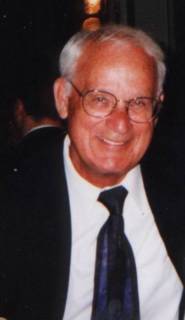
James O'Grady, who was waiting anxiously for a lung transplant on the U.K. Organ Donor Register

James’s organ transplant was made possible because the donor’s family gave permission for their relative’s organ to be donated soon after he died. “My life has been totally transformed and I’ve written to the donor’s family to say I know saying thank you is not enough but I wouldn’t let the lung go to waste and I would give life the best shot, for him and for me.”

By Cara Simpson Coventry Telegraph.net

JAMES O’Grady was verging on death over a year ago – now he has bounced back to health thanks to a life-saving lung transplant.

The 56-year-old Longford man was a prisoner in his own home just 15 months ago, hooked up to a restrictive oxygen tank as he waited patiently for a donated organ.

James said he had about the same chance of winning the National Lottery as he did finding a matching donor lung.

Now he is branding his transplant and rapid recovery a miracle, and urges others to become donor card carriers.

His lucky day arrived on March 15 last year when he received a call to say a matching lung had been found after a year waiting on the NHS Organ Donor Register.

He was rushed to Newcastle’s Freeman Hospital where he underwent a six-hour transplant operation.

“This is the closest I’ve ever come to a miracle,” he said.

“I honestly thought I’d be dead before last year was out because one infection could have killed me.

“My attitude was to take each day as it comes because I knew worrying wouldn’t make the organ arrive any sooner.”

James was diagnosed with the chronic lung condition emphysema in 2000 and placed on the Organ Donor Register in 2009.

The Telegraph reported his anxious wait for a donor lung in 2009 as part of a long-running campaign ahead of that year’s British Transplant Games in Coventry.

James had come to terms with the realisation his time was running out because of the lack of numbers on the Register.

Speaking to the Telegraph at the time, he said: “Breathing is something everyone takes for granted. You don’t even think about it until it’s too late and you’re in the same position as I am now.”

James’s organ transplant was made possible because the donor’s family gave permission for their relative’s organ to be donated soon after he died.

And because of their generosity, James is now able to live life to the full.

Reflecting on the first precious moments after he came around from surgery, he said: “I remember seeing the bright lights of the hospital and the nurse pulling out a large elephant trunk-like tube out of my throat.

"She told me to take a few deep breaths and when I took my first one, it was like drinking fresh water straight from the spring, like sweet syrup was trickling down my throat.

“It was amazing. To say breathing is something we all take for granted is a major understatement.”

James, a former chef and social worker, is now able to walk, enjoy the outdoors, go shopping on his own and exercise.

James said: “My life has been totally transformed and I’ve written to the donor’s family to say I know saying thank you is not enough but I wouldn’t let the lung go to waste and I would give life the best shot, for him and for me.”

James’s wife Joy said: “The transplant has given me my husband back.

“A transplant not only helps the patient, it helps their families too. I’m no longer his carer anymore, just his wife.”

For more information and to join the NHS Organ Donor Register phone 0300 123 23 23 or visit www.organdonor.nhs.uk

“You Have the Power to Save Lives – Register to be an organ and tissue donor & Tell Your Loved Ones of Your Decision”
Register to be a donor in Ontario at beadonor.ca
For other Canadian provinces click here
United States, organdonor.gov (Select your state - top right)
United Kingdom, register at NHS Organ Donor Register
Australia, register at Australian Organ Donor Register
Your generosity can save or enhance the lives of up to fifty people with heart, kidneys, liver, lungs, pancreas and small intestine transplants (see allotransplantation). One tissue donor can help by donating skin, corneas, bone, tendon, ligaments and heart valves

Has your life been saved by an organ transplant? "Pay it forward" and help spread the word about the need for organ donation - In the U.S. another person is added to the national transplant waiting list every 11 minutes and 18 people die each day waiting for an organ or tissue transplant. Organs can save lives, corneas renew vision, and tissue may help to restore someone's ability to walk, run or move freely without pain. Life Begins with You

Wednesday, January 26, 2011

How just two cigarettes a day have left UK woman with COPD and facing a lung transplant


By SANDRA WALSH Mail online

When Carol Thomas decided to quit ­smoking she found it pretty easy. As a typical social smoker she’d never had more than a few cigarettes a day and, for months at a time, would not smoke at all.

Like many people, she assumed ­quitting would mean any damage to her lungs would be reversed.

But five ­cigarette-free years later, Carol was shocked to learn that her ‘habit’ had left her with an incurable lung condition — chronic obstructive pulmonary disease, known as the smokers’ disease.

‘It was a shock. I thought it was only people who’d smoked heavily for years who were at risk, or miners who’d spent their lives down the pits,’ says Carol.

‘The diagnosis terrified me — I was so young and yet I was told there was no cure, only ways of coping with the ­breathlessness and chest infections.

‘I felt ashamed, too, that I’d brought it on myself,’ she recalls.

Her case is far from unusual. Chronic obstructive pulmonary disease (COPD) — the umbrella term for lung conditions including emphysema and chronic ­bronchitis — is the UK’s fifth ­biggest killer, responsible for 30,000 deaths a year (which is more than for breast, bowel or prostate cancer).

Typically, COPD occurs in people over 35 who are, or have been, heavy smokers. But it can also affect social smokers and even those affected by passive smoking.

‘Any amount of smoking will damage the lungs,’ says Dr Nicholas Hopkinson, COPD specialist at the Royal Brompton Hospital, London. While this is the main cause, there are other factors, he says, including genetic susceptibility and ­working with certain chemicals.

‘As a result the lungs become damaged and inflamed, which causes a steady decline,’ explains Dr Hopkinson. ‘The problem is that most people don’t realize they have the disease until they’ve been admitted to ­hospital, by which time they’ve probably had around 20 years of lung damage.

‘People often put their breathlessness and chest infections down to age so don’t bother seeing their GP but, in fact, there’s nothing normal about being out of breath.’

Carol’s history is typical of many sufferers.

As a child growing up in Nottingham, she recalls her grandparents and ­parents smoking; as a young adult social events meant wading through clouds of cigarette smoke.

‘Everyone around me smoked; there was always someone with a cigarette in our house,’ recalls the 50-year-old. She herself started smoking as a teenager, although often went for months at a time without smoking at all.

But by the time she was in her late 30s, the mother of two had begun to suffer recurring chest infections. ‘At least twice a year I’d get really bad bronchitis and have to take several courses of anti-­biotics to get rid of it, but I just thought I was the sort of person whose colds went to their chests.’

‘I’d given up smoking at that point, but still got chest infections.’

One particularly bad infection in 2005 put her in hospital with ­pneumonia.

‘After I’d recovered, the doctor looked at my history and said: “There’s something not right here.” They did tests, including a CT scan, and found inflammation and permanent damage to my lungs. I was told I had emphysema, part of a group of illnesses known as COPD, and there was no cure.’

Further tests revealed that Carol had a genetic condition — Alpha-1-antitripsyn deficiency — which meant her body doesn’t produce a protein that protects the lungs from damaging enzymes.

Smoking accelerates the ­damage — a non-smoker with the ­deficiency would still suffer lung damage, but it might not show up until much later in life. Around one and two per cent of COPD cases have this genetic fault.

In many cases, the lung damage associated with COPD is triggered by tar in cigarette smoke.

This damages the cells lining the airways, causing inflammation; the protecting cells that go to repair the damage exacerbate the inflammation. As a result the ­airways narrow, making it harder to draw air into your lungs.

Meanwhile, chemicals in ­cigarette smoke destroy the ­elasticity of the tiny air sacs in the lungs — these sacs, called alveoli, transfer oxygen from the inhaled air into the bloodstream. The alveoli collapse, so less oxygen passes into the blood. Eventually, patients not only find it takes more physical effort to get air in and out of the lungs, but they also have to breathe more rapidly to get adequate oxygen.

Emphysema and chronic bronchitis are the two main conditions affecting sufferers of COPD, and usually come hand-in hand.

Emphysema refers to the air sacs losing elasticity, while ­bronchitis refers to the airways becoming inflamed and narrow.

‘You can’t reverse COPD but you can stabilize it,’ says Dr ­Hopkinson. ‘In the past 15 years there has been a lot of progress on treatment.

‘Stopping smoking is the single most important thing you can do. In most cases, it actually slows the progression of the disease.’

However, over the next few years Carol’s symptoms became so bad she had to give up her much-loved job at an energy company call center; she now struggles to ­perform even simple tasks such as walking up stairs and the weekly supermarket shop.

As a result of chest infections and bronchitis, she is admitted to hospital up to four times a year.

Even when she is well, she has to take 20 pills every day to help her heart and lungs cope with the strain, and is hooked up to an ­oxygen cylinder for three hours because her lungs are too weak to take in enough oxygen.

‘I’ve always been a positive, ­outgoing person but my ­confidence has been dented,’ says Carol, from Clifton, Nottingham.

‘I try to keep very active at home but tasks such as washing the floor knock me out for hours. I can never have cut flowers in the house because they can carry a bug called pseudomonas which has put me in hospital three times so far. And spray perfumes and deodorants are out as they irritate the airways and make my ­breathlessness worse.

‘But the worst things have been losing the job I loved and the fact that I can’t run around with my three lovely grandchildren.’

Carol’s diagnosis has had a profound effect on her husband of more than 30 years, Gary, and her sons, Clifford, 32, and Caine, 29.

‘They worry about me constantly,’ she says. ‘I try not to let it show how much the disease is affecting me, but it’s definitely getting worse, and it frightens me to think I won’t see my ­grandchildren grow up. I know it upsets my family to see me suffer.’

As with all COPD sufferers in the severe stages of the disease, ­Carol’s life expectancy has been dramatically curtailed and her symptoms are worsening as her lung function decreases.

Her experience should be a warning to all smokers.

As Dame Helena Shovelton, chief executive of the British Lung Foundation (BLF), explains: ‘There is a myth that you can smoke until you’re 40 and you’ll be fine, but it just isn’t true.

‘Early signs of the disease can be detected at young as 25 — any smoker over this age should be tested,’ she says.

The BLF, which campaigns on behalf of anyone with lung ­problems, regularly holds ­roadshows where a simple breath test reveals abnormalities in lung function. Called a ­spirometry test, it is also available in most GP surgeries.

Meanwhile, Carol Thomas is awaiting tests to see if she’s ­suitable for a lung transplant. She adds: ‘Anyone who smokes should come and take a look at a COPD hospital ward.

‘You see patients struggling for breath, wearing oxygen masks, barely able to move.

‘There’s nothing you can do to turn back the clock, but you can help yourself by not smoking and keeping away from anyone who does.’

For more information about COPD and other lung conditions go to lunguk.org

“You Have the Power to Save Lives – Register to be an organ and tissue donor & Tell Your Loved Ones of Your Decision”
Register to be a donor in Ontario at Trillium Gift of Life Network NEW for Ontario: recycleMe.org - Learn The Ins & Outs Of Organ And Tissue Donation. Register Today!
For other Canadian provinces click here
In the United States, be sure to find out how to register in your state at ShareYourLife.org or Download Donor Cards from OrganDonor.Gov
In Great Britain, register at NHS Organ Donor Register
In Australia, register at Australian Organ Donor Register
Your generosity can save or enhance the lives of up to fifty people with heart, kidneys, liver, lungs, pancreas and small intestine transplants (see allotransplantation). One tissue donor can help by donating skin, corneas, bone, tendon, ligaments and heart valves

Has your life been saved by an organ transplant? "Pay it forward" and help spread the word about the need for organ donation - In the U.S. another person is added to the national transplant waiting list every 11 minutes and 18 people die each day waiting for an organ or tissue transplant. Organs can save lives, corneas renew vision, and tissue may help to restore someone's ability to walk, run or move freely without pain. Life Begins with You

Tuesday, December 29, 2009

Researchers Discover Gene Therapy To Prevent Progression Of Emphysema


HealthCanal.com

(Boston) – Researchers from Boston University School of Medicine (BUSM) have discovered a new gene therapy that may prevent the progression of emphysema.

The study, which appears on-line in the Journal of Clinical Investigation, describes a method to express therapeutic genes in lung tissue for a lifetime after only a single treatment.

Alpha-1 Anti-trypsin Deficiency (also commonly called "genetic COPD") is the most common inherited form of emphysema seen in young people due to a mutation in the Alpha-1 Anti-trypsin gene. This genetic disease predisposes affected individuals to early emphysema and cirrhosis of the liver.

According to the researchers, gene transfer into specific cell lineages in vivo remains an attractive yet elusive approach for correcting inherited mutations. Although a variety of techniques have been developed to deliver DNA molecules to cells in vitro, in vivo gene transfer has been limited in many cell types by inefficient gene delivery as well as the limited life-span of differentiated cell types

Using mice, the BUSM researchers discovered a system to deliver genes selectively to as many as 70 percent of a mouse lung’s alveolar macrophages (AM), a key cell type contributing to emphysema.

“We applied this novel approach to achieve sustained in vivo expression of normal human alpha-1 antitrypsin (hAAT) protein at levels able to ameliorate emphysema in mice,” said senior author Darrell Kotton, MD, an associate professor of medicine and pathology and co-director, Center for Regenerative Medicine at BUSM. “The lung macrophages carrying the therapeutic gene survived in the lungs air sacks for the two-year lifetime of the treated mice following a single intra-tracheal injection of the lentiviral vector we had engineered,” he added.

Kotton and his colleagues utilized this method of gene transfer to achieve localized secretion of therapeutic levels of human alpha-1 antitrypsin (hAAT) protein in lung epithelial lining fluid. “The progression of emphysema in mice exposed to elastase was significantly improved by the gene therapy as evidenced by improvements in lung compliance and alveolar size,” said Andrew Wilson, MD, lead author of the study and an assistant professor of medicine at BUSM.

According to the researchers after 24 weeks of sustained gene expression, no humoral or cellular immune responses to the human hAAT protein were detected. “Our results challenge the dogma that lung macrophages are short-lived and suggest these differentiated cells as a target cell that may be considered for in vivo gene therapy applications including the sustained correction of hAAT deficiency,” added Wilson.

“You Have the Power to Save Lives – Register to be an organ and tissue donor & Tell Your Loved Ones of Your Decision”

Register to be a donor in Ontario or Download Donor Cards from Trillium Gift of Life Network. NEW for Ontario: recycleMe.org - Learn The Ins & Outs Of Organ And Tissue Donation. Register Today! For other Canadian provinces click here

In the United States, be sure to find out how to register in your state at ShareYourLife.org or Download Donor Cards from OrganDonor.Gov

In Great Britain, register at NHS Organ Donor Register

In Australia, register at Australian Organ Donor Register

Your generosity can save up to eight lives with heart, kidneys, liver, lungs, pancreas and small intestine transplants. One tissue donor can help up to 100 other people by donating skin, corneas, bone, tendon, ligaments and heart valves

Has your life been saved by an organ transplant? "Pay it forward" and help spread the word about the need for organ donation - In the U.S. another person is added to the national transplant waiting list every 11 minutes and 18 people die each day waiting for an organ or tissue transplant.

Sunday, December 27, 2009

Plan Now to Quit Smoking for New Year’s

Cigarette smoking causes an estimated 438,000 deaths, or about 1 of every 5 deaths, each year, according to estimates from the Centers for Disease Control and Prevention. Adults who smoke cigarettes die 14 years earlier than nonsmokers. The leading cause of chronic obstructive pulmonary disease or COPD, including emphysema, is tobacco smoking. COPD is projected to be the third leading cause of death worldwide by 2020 due to an increase in smoking rates and demographic changes in many countries. As of 2005, the most common reason for lung transplantation in the United States was chronic obstructive pulmonary disease or COPD, including emphysema.


Success Comes After Making a Plan, Receiving Support from Loved Ones

By Leslie White HealthCanal.com

If you’re a smoker who’s considering quitting as part of your new year’s resolutions, you may want to start creating your plan for success.

“Research shows that if a person makes a plan, builds a support system of family, friends and professionals, that they have a greater chance of successfully quitting smoking and beating nicotine addiction,” said Scott McIntosh, Ph.D., director of the Greater Rochester Area Tobacco Cessation Center and associate director of the Smoking Research Program at the James P. Wilmot Cancer Center at the University of Rochester Medical Center. “Quitting smoking is the best decision anyone can make to improve their overall health.”

Earlier this month, the World Health Organization reported that smoking contributes to the deaths of 5 million people each year.

Twelve simple tips for quitting:
  1. Make a plan for quitting. Talk to your doctor about strategies such as cold turkey versus nicotine replacement therapies.

  2. If you can give up cigarettes for 24 hours, you double your chance for success.

  3. Tell your friends, family and co-workers that you plan to quit and rally them to help you stick with it.

  4. Consider using nicotine replacements – gum, patch or Zyban – to help you quit.

  5. Use resources available from the *New York State Smokers’ Quitline: 1-866-NY-QUITS (1-866-697-8487) and www.nysmokefree.com the New York Smokers’ Quitsite.

  6. Avoid risky situations or behaviors that were comfortable when smoking.

  7. Remove all ashtrays, lighters, matches and cigarettes from the house. Just seeing them can make you want to smoke.

  8. Start eating sugarless hard candy or chewing crunchy vegetables – like carrot sticks – to keep your mouth busy. Consider using cinnamon candy, because its “burning” sensation mimics the feeling of smoking and kills the craving.

  9. Drink a lot of water. It helps keep you feeling “full,” and prevents you from overeating and gaining weight. It also helps “cleanse” your body of the toxins from years of smoking.

  10. Practice breathing deeply or take a walk when you’re craving a cigarette. Smoking involves taking long deep breaths, but now it’ll be fresh air rather than chemicals entering your lungs.

  11. Remind yourself why you are quitting - and reward yourself every day you make it without smoking cigarettes.

  12. Age doesn’t matter - older smokers are less likely to try to quit, but when they do try, they are more likely to succeed.

Help with quitting

*For the UK and North America click on the link for a list of major English-speaking charities, helplines and organizations for people who want to give up smoking and need further help or advice. helpwithsmoking.com

Smoking bans in public places

Breathing in second-hand smoke can be a big detriment to those trying to quit smoking. To help you avoid exposure here is list of smoke-free US States and Canadian Provinces as well as efforts around the world to ban smoking.

Canada: Canadian anti-smoking bans

United States: US anti-smoking bans

Global anti-smoking efforts

Monday, March 02, 2009

A lung's lease on life

Lacey, New Jersey man recovers from double lung transplant

Have an opinion on this article? Click comments at the end of this post.

BY MICHAEL AMSEL APP.com

Andrew Penna Jr. was so weakened by his emphysema-plagued lungs that he couldn't even shower without assistance.

"There was so many everyday living things that I couldn't do," said Penna, of the Forked River section of Lacey. "It was so difficult for me. Everything was a struggle. When you can't breathe, it's a really miserable existence."

Penna's prayers for a better life were answered on Jan. 25 when he had a successful double lung transplant at Newark Beth Israel Medical Center, performed by the team of Dr. Lawrence McBride, Dr. Sean Studer and Dr. Christine Migliore.

Newark Beth Israel is the only hospital in the state that performs the procedure, and Penna was the fifth person in the state to have it done.

"I feel like I have been reborn, like a new person has come out of my body and taken over," Penna said. "I get all choked up when I think of what those doctors did for me."

Penna now must undergo a three-month pulmonary rehabilitation program at Community Medical Center in Toms River. He walks on a treadmill to build up stamina, uses a device called an Ergometer to strengthen his arms and pedals away on a recumbent stepper to keep his leg muscles firm.

Debbie Jeffers, pulmonary rehab coordinator at Community Medical Center, said patients go through the exercises to improve aerobic capacity, strength and endurance.

"We want to keep them working out, because if they just sit around after surgery, they become deconditioned," Jeffers said.

Penna was on the lung donor list for just three months before a suitable match was found. Eileen Garrity of Forked River hasn't been so lucky.

When her lungs collapsed in December 2007, she was rushed to the Hospital of the University of Pennsylvania for surgery. She is waiting patiently for either a single lung replacement, or a double.

My left lung is worse than my right one because of radiation for breast cancer," said Garrity, 64. "I have a lot of faith. God didn't bring me this far between breast cancer and this (emphysema) to just drop me on my head now."

Garrity said she smoked cigarettes for 45 years, and a lot of what she is going through now is "self-inflicted."

"Let's be honest: nonsmokers are higher up on the donor list," Garrity said. "I am moving up the list slowly and hoping and praying. I am also going to sign up for the donor list at Newark Beth Israel, which will give me two chances to go along with my donor list at the University of Pennsylvania."

Penna, who smoked cigarettes for 15 years, said his goal at the end of rehabilitation is to walk the entire length of the Point Pleasant Beach boardwalk.

"This rehab is really stimulating my lungs," Penna said. "When I am not here, I try to do a lot of walking. They tell me walking is great to build up your stamina. One day, I am going to finish that walk on the boardwalk. You just wait and see."

“You Have the Power to Save Lives – Sign Your Donor Card & Tell Your Loved Ones of Your Decision”

Register to be a donor in Ontario or Download Donor Cards from Trillium Gift of Life Network
For other Canadian provinces click here

In the United States, be sure to find out how to register in your state at ShareYourLife.org or Download Donor Cards from OrganDonor.Gov

In Great Britain, register at NHS Organ Donor Register

In Australia, register at Australian Organ Donor Register

Your generosity can save up to eight lives with heart, kidneys, liver, lungs, pancreas and small intestine transplants. One tissue donor can help up to 100 other people by donating skin, corneas, bone, tendon, ligaments and heart valves

Tuesday, December 16, 2008

Organ donation advocate and volunteer fondly remembered

BY Megan Doherty The Canberra Times

Andrew Bird was well known in Canberra for his strong advocacy of organ donation and his volunteer work with the YMCA.

But his cheeky sense of humor and spirit of life were what most people remembered about him.

Mr Bird, who would have turned 41 on December 28, died last month, just six months after receiving a double lung transplant at St Vincent's Hospital in Sydney.

The former bus driver suffered from coronary obstructive pulmonary disease, which he developed in the past three years, and which was partly related to emphysema.

His parents, Noreen and Des Bird, of Farrer, cared for their son in his final years. Family and friends gathered at Andrew's funeral in Canberra earlier this month after his death on November 27.

"I was there when he took his first breath and there when he took his last," Mrs Bird said.

Andrew, who volunteered with the YMCA, at its community gym at Chifley among other places, was "a great jokester" who tried never to let his illness affect his positive outlook.

"He always had a job, he always looked on the bright side of life, always had girlfriends, and in the last three years of his life he became very proactive in promoting organ donor awareness," she said.

He had been a moderate smoker and gave up as soon as his condition became known. He was on an oxygen tank 24 hours a day until his transplant.

"I don't advocate anyone putting a cigarette in their mouth and Andrew should have been one who never did," Mrs Bird said.

When he received his double lung transplant in May, Mr Bird was able to breathe on his own. He could play his beloved lawn bowls at Yamba Sports Club unencumbered by his oxygen tank. He believed he had a second chance at life.

"He was really good in the first little while. He was playing sport. He tried to ride a bike and put on weight and was looking well," Mrs Bird said.

"Then bells started to ring that things weren't quite right. His transplant team was really devastated because an extremely low percentage of people have complications in their first 12 months of receiving an organ and it happened to him. They worked so hard for him. And he fought so hard."

Mr Bird couldn't donate his own organs because of the medical drugs he had to take but he was always grateful to his donor.

Mr Bird Sr rang Ian "Macca" McNamara on ABC Radio's Australia All Over yesterday to let him know about Andrew's death and to thank the St Vincent's transplant team. Andrew had been a regular caller to Macca.

"He had a bloody go," Mr Bird said.

Among those to offer the Birds their condolences was Chief Minister Jon Stanhope, who wrote a letter of sympathy on behalf of his Government and "the people of Canberra".

“You Have the Power to Save Lives – Sign Your Donor Card & Tell Your Loved Ones of Your Decision”

Register to be a donor in Ontario or Download Donor Cards from Trillium Gift of Life Network
For other Canadian provinces click here

In the United States, be sure to find out how to register in your state at ShareYourLife.org or Download Donor Cards from OrganDonor.Gov

Your generosity can save up to eight lives with heart, kidneys, liver, lungs, pancreas and small intestine transplants. One tissue donor can help up to 100 other people by donating skin, corneas, bone, tendon, ligaments and heart valves

Tuesday, December 02, 2008

COPD patient waits for lung transplant

He's running to catch his breath

Chronic obstructive pulmonary disease is becoming a scourge across the country

By Chris Zdeb canada.com

EDMONTON - David Smith started smoking when he was 15. He stopped the day he collapsed.

Smith, 63, had been experiencing some shortness of breath before the collapse two years ago, but he figured it was because he was getting older.

During the two-week stay in hospital that followed, his lungs were found to be operating at 25% capacity and he was diagnosed with chronic obstructive pulmonary disease, or COPD.

An estimated 1.5 million Canadians suffer from the lung-damaging disease, which includes emphysema and chronic bronchitis. Another 1.6 million are believed to have it, but haven't been diagnosed.

More people are hospitalized and readmitted because of COPD than with heart failure, angina and other serious chronic diseases. It is the fourth leading cause of death of adult Canadians.

In 85% to 90% of cases, COPD is the result of smoking tobacco, says Dr. Ron Damant, an associate professor of respirology at the University of Alberta. But any kind of chronic inhalation -- second-hand smoke, occupational pollutants, outdoor air pollution -- can cause it as well.

Early symptoms are coughing and bringing up a little sputum (saliva and mucus). Smokers often think that's normal, so they don't worry about it, but it's the first sign of irreversible damage to the lungs and other parts of the body, Damant says.

A chronic cough is always a sign of trouble because it's not a normal thing to have."

Most of the full-blown cases of COPD that doctors see today are in patients who were smoking 20 to 50 years ago.

Smith is on a waiting list for a lung transplant, along with 51 other people, and it could be a year or two before his turn comes, he figures.

Even though he has very little lung capacity, he's not a transplant priority because with the rehabilitation exercises he does three times a week, he is able to function better than most people on the list.

Smith directs the choir at his church, but is no longer physically able to direct the seniors choir with which he is involved.

He says what's past is past and he can't undo the damage he's done to his body by smoking. "What I don't understand is the kids that start smoking nowadays when there is so much information out there about the dangers," he says. "If that information had been available when I was their age, I never would have started."

A diagnosis of COPD is not a death sentence, Damant says.

"The majority of people I know who have the condition, with treatment -- rehabilitation exercises, lifestyle changes -- can go on to live a good quality of life," he says.

But if you don't smoke, don't start. And if you do smoke, stop as soon as possible because it's never too late, Damant says. - The Lung Association runs a Breathworks program, which provides COPD patients with information and support. For more information, go to lung.ca and follow the links to Breathworks, or call the help-line at 1-866-717-COPD (2673).

“You Have the Power to Save Lives – Sign Your Donor Card & Tell Your Loved Ones of Your Decision”

Register to be a donor in Ontario or Download Donor Cards from Trillium Gift of Life Network
For other Canadian provinces click here

In the United States, be sure to find out how to register in your state at ShareYourLife.org or Download Donor Cards from OrganDonor.Gov

Your generosity can save up to eight lives with heart, kidneys, liver, lungs, pancreas and small intestine transplants. One tissue donor can help up to 100 other people by donating skin, corneas, bone, tendon, ligaments and heart valves