Showing posts with label lung tgransplant. Show all posts

Monday, March 21, 2011

New therapy found for rare lung disorder, lymphangioleiomyomatosis (LAM)

News Release University of Cincinnati Health Center

CINCINNATI—Researchers at the University of Cincinnati (UC) and Cincinnati Children's Hospital Medical Center have found that the FDA-approved drug sirolimus, used primarily to prevent rejection in organ transplant patients, stabilized lung function in women with lymphangioleiomyomatosis (LAM).

The Multicenter International LAM Efficacy of Sirolimus (MILES) trial was the first randomized, controlled study designed to develop a therapy for this life-threatening illness, which currently has no cure or treatment.

These results are being reported in the March 16, 2011, online edition of theNew England Journal of Medicine.

LAM is a progressive, cystic lung disease that occurs almost exclusively in women. In LAM, an unusual type of smooth muscle cell grows uncontrollably and spreads from an unknown source to restricted areas in the body, including the lungs, lymph nodes and vessels and kidneys, limiting the flow of air, blood and lymph.

Shortness of breath and recurrent lung collapse are common in patients with LAM, and until now, lung transplantation has been the only hope for patients who progress to respiratory failure.

"LAM affects about five people per million and occurs in 30 to 40 percent of women with tuberous sclerosis complex (TSC), a genetic disorder which also causes tumors to form in the kidneys, brain, heart and other organs," says Frank McCormack, MD, director of the pulmonary, critical care and sleep medicine division at UC and lead investigator on the study.

"Sirolimus, otherwise known as rapamycin, showed promise for patients with LAM in a pilot study conducted in Cincinnati and reported in the New England Journal of Medicine in 2008, but the relative risks and benefits of sirolimus for treatment of patients with this condition have remained unclear. In this international, multicenter study, we evaluated the safety and efficacy of one year of sirolimus in stabilizing and/or improving lung function in women with LAM."

McCormack says LAM cells isolated from lung lesions have TSC mutations and exhibit activation of a key sirolimus-sensitive growth pathway. When exposed to the drug in culture, the growth of LAM cells is stopped.

Experiments in TSC animal models have also demonstrated that sirolimus shrinks tumors in the liver and kidneys.

The MILES study was conducted within the National Institutes of Health (NIH)-supported Rare Lung Diseases Consortium, led by UC and Cincinnati Children's physician and pulmonary biologist Bruce Trapnell, MD, and co-directed by McCormack, and involved 13 institutions from around the world. Data was reported using Internet-based systems connected to a centralized, Internet-based data coordinating center headed by Jeffrey Krischer, MD, at the University of South Florida, Tampa.

"The trial included a screening visit and a year-long double blind, placebo-controlled treatment period, followed by a year of observation," says McCormack.

All eligible participants were female, aged 18 years or older and had a confirmed diagnosis of LAM with abnormal lung function.

Patients meeting the criteria were randomly assigned to either receive an initial dose of oral sirolimus at 2 milligrams per day or a matched placebo, and sirolimus levels were measured at each follow-up visit. Results were revealed only to an independent medical monitor who made dosing recommendations to maintain serum levels within a pre-specified target range.

A total of 89 patients with LAM were enrolled in the United States, Canada and Japan. Patients underwent baseline lung function testing, and lung function and exercise outcomes were measured over the course of six visits in the first year. Participants were also given questionnaires to determine how their symptoms changed throughout the course of the study.

Researchers found that sirolimus stabilized lung function and was associated with improvement in measures of functional performance and quality of life.

Sirolimus also reduced levels of serum vascular endothelial growth factor-D, or VEGF-D, a protein that is known to be elevated in LAM. VEGF-D promotes the growth of lymphatic vessels and can be involved in the spread of cancers.

"After discontinuation of sirolimus, lung function decline resumed and paralleled the placebo group," McCormack says. "Adverse events were more common with sirolimus, but the frequency of serious adverse events between the groups was not different."

McCormack says that these results suggest that sirolimus may be useful as therapy for moderately severe LAM-related lung disease.

"LAM is typically slowly progressive, and sirolimus therapy has risks, so treatment decisions should be individualized. Care must be taken in generalizing the results to those with milder or more severe lung disease due to LAM," he says. "Also, additional trials are needed to determine the optimal dose and duration of treatment with sirolimus. Given the toxicity profile of the drug during a one-year period, the long-term safety of this approach over an extended course must be carefully evaluated."

The trial involved efforts by the LAM Foundation that lobbied for the NIH's attention, organized and recruited patients and supported pivotal basic and clinical research that formed the scientific basis for the study.

###

This study was funded by the NIH Office of Rare Disease Research, the Food and Drug Administration, the LAM Foundation, the Japanese Ministry of Health, Labour and Welfare, the Canadian Institutes of Health Research, Cincinnati Children's, UC, the Tuberous Sclerosis Alliance and Vi and John Adler and the Adler Foundation.

Pfizer, maker of sirolimus, provided the drug and financial support but had no role in study design, conduct, analysis or reporting. McCormack cites no conflict of interest.

Regulatory oversight was provided by the National Center for Research Resources of the NIH. Participating centers included UC; Cincinnati Children's; the University of Toronto, Canada; the University of Texas Health Science Center at Tyler; the University of California at Los Angeles; Oregon Health and Science University, Portland; Niigata University Medical & Dental Hospital, Japan; National Hospital Organization Kinki-Chou Chest Medical Center, Osaka, Japan; the National Jewish Medical and Research Center, Denver; the National Heart, Lung, and Blood Institute, Bethesda; Medical University of South Carolina, Charleston; the Cleveland Clinic Foundation; and Brigham and Women's Hospital, Boston.


“You Have the Power to Save Lives – Register to be an organ and tissue donor & Tell Your Loved Ones of Your Decision”
Register to be a donor in Ontario at Trillium Gift of Life Network NEW for Ontario: recycleMe.org - Learn The Ins & Outs Of Organ And Tissue Donation. Register Today!
For other Canadian provinces click here
In the United States, be sure to find out how to register in your state at ShareYourLife.org or Download Donor Cards from OrganDonor.Gov
In Great Britain, register at NHS Organ Donor Register
In Australia, register at Australian Organ Donor Register
Your generosity can save or enhance the lives of up to fifty people with heart, kidneys, liver, lungs, pancreas and small intestine transplants (see allotransplantation). One tissue donor can help by donating skin, corneas, bone, tendon, ligaments and heart valves

Has your life been saved by an organ transplant? "Pay it forward" and help spread the word about the need for organ donation - In the U.S. another person is added to the national transplant waiting list every 11 minutes and 18 people die each day waiting for an organ or tissue transplant. Organs can save lives, corneas renew vision, and tissue may help to restore someone's ability to walk, run or move freely without pain. Life Begins with You

Tuesday, July 15, 2008

Doctor has double-lung transplant due to cystic fibrosis

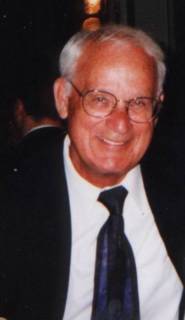
Dr. David Salgado
From the Telegraph-Journal, New Brunswick, Canada:

By Erin Dwyer
Hampton, NB - Dr. David Salgado spent a career making other people better.

Week in and week out, he saw patients, diagnosed diseases and prescribed treatments -all the while battling his own life-threatening disease.

Dr. Salgado was diagnosed as a child with cystic fibrosis, a fatal genetic disease that causes the body to produce thick, sticky mucous, which clogs the lungs and leads to life-threatening lung infections. Last August, the 48-year-old family physician in Hampton had to give up his medical practice because his own health had deteriorated.

After 23 years of caring for his some 3,000 patients, Dr. Salgado had become the patient, relying on oxygen 24 hours a day.

"I was dying," he said in an interview.

Today, Dr. Salgado's lifelong battle with the disease is over. After a seven-month stay in Toronto where he underwent a double-lung transplant, he's home recuperating, spending time with his family and doing some of the things that a year ago seemed impossible.

Like kayaking. Doing yard work.

"That's one of my favorite activities," he said. "I still have to rely on my family and my wife to do the hard, continuous work. But I'm good at telling people what to do."

Former patients in Hampton say he is a kind and generous doctor who goes beyond the call of duty. He is a humanitarian, they say, but above all else, he's humble and private. On this day, however, Dr. Salgado spoke about his surgery and his recovery as a way to thank his former nurse, Christine Atherton, who "held the fort" while he was in Toronto, and the hundreds of Hampton residents and the Saint John medical community who rallied behind him and raised over $50,000 to help pay for his medical costs. Because of his congenital disease, he was never able to secure health or life insurance.

"I can't thank them enough. I'm not sure if I would have gone through with the whole process if it had not been for the community's support."

Dr. Salgado and his wife Sally knew at some point they would have to face his disease head on. After all, the median age of survivors (with cystic fibrosis) in Canada is 37 and he was already well into his 40s. Still, three years ago, the prospect of requiring a double-lung transplant seemed a world away.

"Three years ago, I was living a very active life and keeping up with my family and friends," he said.

In the early months of 2007, that all changed. His health began to deteriorate. Breathing became more difficult. By August, he was forced to close his practice and go on oxygen 24 hours a day. Things looked bleak. Without insurance, trying for a transplant would cause financial hardship to his family. And then there was simply the disruption to their lives while he waited to qualify.

"My wife and I had spoken. We knew this was coming," he said. "But tying your family up with this whole process, a year, two years or three years, it wouldn't be easy. And there were financial considerations. It wasn't something we would have considered."

But the turning point was when the community of Hampton rallied behind him.

When some of his patients learned he was failing fast, they organized a dance and a silent auction and set up a bank account for donations. Former mayor Jim Hovey and former patient Paula Perry spearheaded the event. In no time, they raised nearly $50,000. In the new year, the Saint John Medical Society held a fundraiser, spearheaded by Dr. Michael Morse and Dr. Greg MacLean, and raised yet more funds.

Until the Hampton fundraiser, Dr. Salgado was somewhat resigned to die with the disease. But the community's response - and the financial assistance - motivated him to apply for a transplant.

"It's been difficult to personally say thank you to everybody because there were so many."

In December, Dr. Salgado and his wife moved to Toronto to await a transplant. His brother, Dr. Mike Salgado, remembers not having any expectations prior to the surgery.

"You know the odds are sort of against you in terms of finding a donor, finding the right size donor. There's a lot of factors that can prevent you from getting a transplant. So all of these things are weighing on the back of your mind while you're waiting for the transplant. And his health was not that great leading into the transplant. We were all a little concerned as to whether he would get the transplant or not, and find a match in time."

Three months after arriving in Toronto, Dr. Salgado got the call that they had found a donor.

"It was quick because I was dying," he said. "It was do or die. Most people are obviously very sick and they don't get on the transplant list unless you're likely to die within a year," he said.

"In my case, when I finally arrived there, they realized I was sicker than they thought and was deteriorating faster than they thought."

Dr. Salgado remembers little about the surgery. He was given anaesthetic at 6 a.m. on a Thursday and awoke the following afternoon.

"It was like I had a nap," he said. "I felt good. I felt clear headed."

For 24 hours after surgery, Dr. Salgado was on a respirator waiting for the lungs to recuperate from the traumatization of the transplant. In some cases, it takes them two weeks to recover. In his case, he was walking around and breathing with a new set of lungs in less than a week.

Dr. Salgado can't say enough about the Toronto General Hospital's Multi-Organ Transplant Program. And he can't say enough about the organ donation program.

"I wouldn't be here if the program weren't what it is."

His brother shares the same respect for the donor program.

"I definitely made sure our donor cards were all signed and that my intentions were clear. Organ transplants have really come a long way in the last number of years and that's coming from a physician's perspective. It's really amazing what they can do and anyone thinking of organ donation, this is certainly an example of a real success story."

Still, Dr. Salgado wants to remain respectful of the donor and his or her family whose selfless donation has allowed him to live. He doesn't know anything about the person who donated the lungs. It's kept confidential. And he's uncomfortable about talking about it. But Dr. Salgado said he holds a special place for the donor in his heart.

"Of course I do. Every breath I take I thank the donor for the opportunity to be with my family. But it's not something that I dwell on. I have to pinch myself every once in awhile to see if this is real because it doesn't even feel like anything happened. Other than some sore muscles and some stiff joints, I feel like the same person I was a year ago.

"It's interesting," he added. "I arrived home and I looked out my back window at the back garden we have here. And I thought, we have to prune this tree or do something about that hedge, or what have you. It's as though I've picked up where I was when last healthy and the last year or year and a half is something that I've chased from my mind. It didn't happen. I don't like to dwell on the suffering over the last year.

"There is hope," he said, "that we can pick up and get on with our lives in the way that we were before and sharing time together."

Still, Dr. Salgado is cautious about looking too far into his future. He knows he runs significant risks for complications, like pneumonia and rejection. And some of the drugs he's on make him feel like he's suffering from the flu and are hard on his kidneys.

"It's like you're waiting for the other shoe to drop. But I'm remaining positive. I've always had a positive outlook."

So positive that's he's aiming to reopen his practice in the new year.

"I feel ready to open it now, but if I spend all my energy on opening my practise, I'm not focusing on my recovery," he said. "So I'm going to spend the next six months rehabilitating. It will be the first summer I've had off."

“You Have the Power to Save Lives – Sign Your Donor Card & Tell Your Loved Ones of Your Decision”

Register to be a donor in Ontario or Download Donor Cards from Trillium Gift of Life Network
For other Canadian provinces click here

In the United States, be sure to find out how to register in your state at ShareYourLife.org or Download Donor Cards from OrganDonor.Gov

Your generosity can save up to eight lives through organ donation and enhance another 50 through cornea and tissue donation