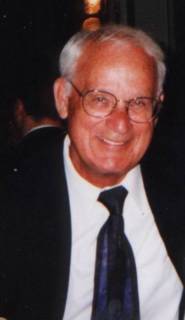
Lynt Johnson, M.D., chief of the division of transplant and hepatobiliary surgery at Georgetown University Hospital in Washington, D.C., explains how a new procedure is making liver donations easier than ever before.By: Ivanhoe Broadcast news8austin.comOn living donors: "These people are, first of all, unbelievable people who come forward to have an unnecessary operation for themselves in order to help someone else. The courage of these individuals is just unbelievable...."
How many people need a liver transplant every year?Dr. Johnson: Currently, there are about 17,000 or 18,000 patients waiting for liver transplantation across the United States. Each year there are about 5,000 liver transplants that occur. The problem is that we do not have enough donor organs for all of the patients on the waiting list. About 17 patients die every day waiting on a transplant in this country, and therefore that is what drives the need for living donor transplants. If everyone could donate who is eligible to donate, and the families consented, then we would not have this crisis. But we do have a crisis because of the overall need for these patients.
Is live organ donation a fairly major surgery?Dr. Johnson: Yes, it is a major operation, and we have been working on it for a number of years. These people are, first of all, unbelievable people who come forward to have an unnecessary operation for themselves in order to help someone else. The courage of these individuals is just unbelievable in my opinion. We have worked on a number of things to try to make the whole process easier for our donors because often times the donors would come out of these operations looking worse than their recipients and having a harder recovery than the individuals that they are donating to, who are obviously much sicker than they were.
What does the traditional donating surgery involve?Dr. Johnson: It involves about a seven to eight hour operation, and typically the same type of incision that you would use for the recipient. In the past, that incision has looked like a Mercedes Benz replica on the abdominal cavity, and that incision runs anywhere from about 16 to 24 inches long. It has one part that goes straight up and down in the middle, and then two pieces almost like a peace sign, that go underneath the rib cage. The incisions that go underneath the ribcage on either side divide the muscles that attach to the rib cage, and so that's a big operation and a big recovery for individuals who are really being altruistic in trying to help someone else out who do not really need an operation at all.
So not only is the operation painful, but the recovery must be very painful as well.
Dr. Johnson: Typically, the patients require a hospital stay of about week or so, and usually it's about four to six weeks before they are really feeling back to normal.
You've taken a huge incision and turned it into just a couple of inches?Dr. Johnson: It's slightly larger than the size of my wrist. Literally the initial size of the incision is predicated by the size of the surgeon's hand because we do it as a laparoscopic assisted or hand assisted operation.
How big are your hands?Dr. Johnson: You could do it based on the size of your glove, I wear a 7.5 inch glove, and so my incisions typically are 7.5 centimeters, which is about three or 3.5 inches.
How do you go from such a large incision to one that's relatively tiny?Dr. Johnson: It turned out that the need for the big incision had to do with mobilizing the liver. The liver itself is attached to the abdominal cavity by ligaments and pieces of tissue that normally were tucked behind the liver, and so you had to make this big incision to reach down and bring the liver up and so forth. What we did was we applied techniques of laparoscopic surgery combined with open techniques to safely be able to do that same part of the procedure without making the incision underneath the ribcage. And so we make two tiny incisions, one right at the navel to put our laparoscope in so we can see, and the other is about an half an inch incision that allows us to put an instrument in that divides and cauterizes the tissue as we go through, and then we put our hand in to mobilize the liver. The first part of the operation is mobilizing the liver so that we can divide it into two pieces and that is done laparoscopically. Then we take our hand out and do the rest of the operation through the incision where our hand was. Essentially we have combined both techniques in a way that eliminates almost 70 percent of the incision that these donors used to have.
Does that cut down surgery time as well?Dr. Johnson: It does. Part of it has to do with both ends. First of all, you do not have to make as big an incision and get things set up as you would, and second of all, at the end of the operation, you do not have to close as much. On top of that, what we found is that actually you can see and visualize things much better with laparoscopic surgery then you can do with an open operation. So that itself expedites the process. Because the scope allows us to magnify the tissues it allows us to really be able to see some things that we were not able to see in the same fashion.
What are the risks of laparoscopic surgery?Dr. Johnson: The biggest concerns have been our inability to control bleeding. There are major blood vessels that go into the liver, and that is why we combine these two techniques because with your hand in place, then your hand can serve as a means of compression for bleeding and so it really combines the best of both worlds. The same control that you have with an open operation with the ability to minimize the size of the incision that you do with laparoscopic surgery.
What risk are you removing by using this method instead of the traditional procedure?Dr. Johnson: There are a number of complications that can occur with the incisions that we used to use including things like hernias that will require patients to come back and actually get another operation. The healing process itself is usually cut in half with this new procedure, so patients stay in the hospital three or four days instead of a week. They usually feel totally better in a matter of two or three weeks. All of those things are advantages over the standard operation.
Tell me about the father and son case.Dr. Johnson: This is a very neat case. Often times for children who need a transplant, the biggest obstacle is the size of the organ because there are few kids that become donors themselves. Often times kids either have to wait on the list for a size appropriate child to become a donor or they have to split a deceased donor organ. The problem is that most of our deceased donor organs are now from older individuals that are not very good organs to split into a piece for a child. So the child's parents become natural potential live donors for their kids and in this particular case, Torrey Brown, Sr., donated for Torrey Brown, Jr. He was an appropriate match to his son by blood type, and so we took off the smaller piece of his liver, which is the left lateral segment, which represents about 25 percent of the liver, and we were able to do it laparoscopically. I think Torrey went home two days after his operation, and he was back to work very shortly thereafter.
Will Torrey Jr. be able to live a normal life after his transplant?Dr. Johnson: He should be able to live a normal life aside from the fact that he will need to take some medication for the rest of his life. The number and the amount of medications do go down over time, and most patients at some point get down to one or two medicines a day, which is probably not much different than a lot of us take on a daily basis.
What goes through your head when you are working on a father/son team, and especially on a baby?Dr. Johnson: What we do is obviously a very special part of medicine in that there are very few areas in medicine where you rely on an outside source in order to allow someone to get healthy. Most times that outside source is a family who has donated their deceased loved ones organs but there are also these courageous living donors who come forward who donate. There is no other part of medicine that you have a situation like this. So it’s a very special occasion when it happens, and you know, there is a feeling of euphoria when things go very well, and there is obviously a feeling of sadness when they do not go well. Fortunately, most times it goes very well, and so there is a very special feeling you get when you are involved in one of these cases.
How long does it take a donor's liver to regenerate?Dr. Johnson: Both portions of the liver will regenerate, and that is one of the interesting powers of the liver is that it is one of the few organs that will actually regrow itself. About 90 percent of the liver will grow back within about three months. During that three month period, Torrey Sr. will not feel that he has part of his liver missing, he will not know the difference, nor will he feel it as its growing back. As Torrey Jr. grows, the liver will grow with him. And it’s a very amazing organ in terms of how it regenerates. You cannot take a kidney out and put a small kidney in and over time have that kidney grow into a bigger kidney. The kidney is the size it will always be, and the same as with all other organs, but the liver is a very special organ.
Is this the only transplant that is being done this way?Dr. Johnson: Laparoscopic removal all started with the ability to laparoscopically remove kidneys. And for years we sort of laughed and said liver donation will be the last thing that anybody will ever try to do laparoscopically. Nobody in his or her right mind would try to take a big part of a liver out laparoscopically. What we came up with was something different. It’s the type of thing where combine the best of laparoscopy with the best of the open techniques, you put them together and you come out with a process that is a hybrid, a procedure that in the end benefits the patient in a way in which it would not have if you did not think outside the box.
“You Have the Power to Save Lives – Sign Your Donor Card & Tell Your Loved Ones of Your Decision”
Register to be a donor in Ontario or Download Donor Cards from Trillium Gift of Life Network
For other Canadian provinces click here
In the United States, be sure to find out how to register in your state at ShareYourLife.org or Download Donor Cards from OrganDonor.Gov
Your generosity can save up to eight lives with heart, kidneys, liver, lungs, pancreas and small intestine transplants. One tissue donor can help up to 100 other people by donating skin, corneas, bone, tendon, ligaments and heart valves