Friday, March 17, 2006

Irish Pubs Under Smoke-free Law in Ireland Show 91% Lower Indoor Air Pollution Than 'Irish Pubs' in Cities Around the World

This news release from the Harvard School of Public Health about air quality in Irish Pubs where smoking is permitted, as well as the much improved air quality in pubs where smoking is banned, will be of special interest to those of us with respiratory problems who must avoid breathing secondhand smoke. This excerpt from the press release stresses the dangers:
Secondhand smoke exposure remains a major public health concern that is entirely preventable. Secondhand smoke is a recognized human carcinogen containing at least 250 chemicals that are known to be toxic or carcinogenic, and is responsible for an estimated 3,000 lung cancer deaths annually in the U.S. among people who have never smoked as well as more than 25,000 deaths annually from coronary heart disease in never smokers, plus respiratory infections, asthma, Sudden Infant Death Syndrome (SIDS) and other illnesses in children. Dangers of secondhand smoke exposure are highest among restaurant and bar workers whose workplaces typically are not regulated for air quality and who have some of the highest lung cancer rates of any occupation.

Here in Ontario, Canada a law comes into effect at the end of May, 2006 that bans smoking in all enclosed workplaces and public spaces, including bars, restaurants, bingo halls and private clubs such as legion halls. A similar ban has been in effect since 2000 in the Waterloo Region of Ontario where I live and it's wonderful not to be concerned about breathing smoke when going out.

For immediate release: Thursday, March 16, 2006
Boston, MA - A survey of air pollution levels in "Irish pubs" around the world has found that indoor air pollution in authentic Irish pubs in Ireland, where a smoke-free law has been in effect for two years, is 91 percent lower than in "Irish pubs" located in other countries and cities where smoke-free laws do not apply. Researchers from Harvard School of Public Health (HSPH), Roswell Park Cancer Institute and health authorities in Ireland collaborated on the project that assessed air samples from 128 "Irish pubs" in 15 countries in North America, Europe, Australia and Asia.

In March 2004, the Republic of Ireland became the first country to have a nationwide ban on indoor smoking in all public spaces -- including restaurants and pubs. The policy provides an opportunity to assess the effectiveness of comprehensive smoke-free laws by comparing Irish indoor public spaces to public spaces elsewhere. Despite claims that the law could have a negative economic impact, Ireland has seen no decline in business at pubs and restaurants and, in fact, business in that sector has improved according to the Central Statistics Office (Ireland) (www.cso.ie)...Full news release

Wednesday, March 15, 2006

Stanford/Packard Study Finds Potential New Treatment for Cystic Fibrosis

Approximately 16 percent of all lung transplants are due to cystic fibrosis and any hope for preserving lung function in cystic fibrosis patients is always welcome news that we are pleased to report.

3/14/06 News Release
STANFORD, Calif.
A compound that has shown promise in combating some chronic inflammatory diseases may be useful in preserving lung function in cystic fibrosis patients, say researchers at the Stanford University School of Medicine and Lucile Packard Children's Hospital. The researchers have recently completed a Phase 1 clinical trial of the compound and have begun a Phase 2 clinical trial to test its efficacy in a larger number of patients.

“These people basically destroy their lungs through ongoing inflammation and infection,” said research associate Rabindra Tirouvanziam, PhD, the first author of the study. “We’re optimistic that, with further research, we may be able to inhibit this process.” The findings were published in the early online edition of the Proceedings of the National Academy of Sciences on March 13.

Cystic fibrosis is the most common disease caused by a recessive gene in Caucasians; about one in 2,500 infants are affected. Although the disorder was formerly fatal in childhood, the expected lifespan of sufferers has been increasing steadily with the advent of new treatments. But the attendant lung inflammation and scarring still results in the loss of three to four percent of lung function every year... full news release

Tuesday, March 14, 2006

Double Transplants May Offer One Solution to Short Supply of Donated Kidneys

Medications post organ transplant can cause kidney complications that lead to the need for a kidney transplant in some cases, and this study from Wake Forest University Baptist Medical Center will be of interest to patients on the waiting list for a kidney. The press release also offers a good explanation of how kidney transplants are performed.

WINSTON-SALEM, N.C. – Transplanting a pair of kidneys with limited function into one patient can be just as successful as the standard procedure in which a patient receives a single kidney, according to new research at Wake Forest University Baptist Medical Center.

“Performing double transplants using kidneys that would otherwise be discarded may be one viable solution to the growing shortage of organs for transplantation,” said Robert Stratta, M.D., co-author of a study being presented today at a meeting of the Central Surgical Association in Louisville, Ky.

During the 45-month study period, 19 patients underwent double transplants using organs from deceased donors that had been turned down by other centers because of limited function. The kidneys had marginal filtering capacity either because they were very small – from children – or they were from older adults who had begun to lose some kidney function...full press release.

Monday, March 13, 2006

Special request

I'm posting this request received today from Jim MacKenzie. (You can send a message to Jim's email)

Hi Merv. My name is Jim MacKenzie. My wife Elizabeth had a double lung transplant June 25th, 2004. Today she's lying in hospital with lung rejection. It's just a matter of days. It's going on 5 weeks when she was admitted and going down hill fast. She can't eat or drink and they stopped all rejection medication. So I was wondering if you could get your contacts to pray for her. Thank you. Jim.

Saturday, March 11, 2006

Magazine article - Living after a lung transplant

Below are links to the cover story in the March 6th issue of Advance for Respiratory Care Practitioners* that highlights a talk on living after a lung transplant given by a panel representing the Toronto General Hospital lung transplant program. The editors wanted to show that an active life is very possible after a lung transplant and I fortunately was able to be photographed enjoying my love of cross-country skiing, even with one lung.
*This is a U.S. magazine with the highest readership in the country in its category.

View the Cover photo - To read the article enter the title LIVING AFTER A LUNG TRANSPLANT in the search box to the left of the photo.

The venue was CHEST 2005, the annual convention of the American College of Chest Physicians (ACCP). It was held last fall in Montreal and about 5,000 attendees were registered. (Of course not all attended our symposium!).

Our panel included Dr. Lianne Singer, medical director, Toronto Lung Transplant Program, Tara Bolden, clinical coordinator of Toronto General's Transplant Psychiatry Multi-Organ Transplant program and me. Merv.

Wednesday, March 08, 2006

Pillows - a hotbed of fungal spores

Life-threatening Aspergillua pneumonia and sinusitis is a problem for immuno-compromised transplant patients and this news release from the University of Manchester suggests that the type of pillows used outside the hospital may be a hotbed of fungi spores that cause the disease. Read on.

MANCHESTER - Fungal Research Trust

Researchers at The University of Manchester, funded by the Fungal Research Trust, have discovered millions of fungal spores literally right under our noses; in our pillows. Aspergillus fumigatus, the species most commonly found in the pillows, is most likely to cause disease; and the resulting condition Aspergillosis has become the leading infectious cause of death in leukaemia and bone marrow transplant patients. Fungi also exacerbate asthma in adults.

Aspergillus is a very common fungus, carried in the air as well as being found in cellars, household plant pots, compost, computers and ground pepper and spices.

Invasive Aspergillosis occurs mainly in the lungs and sinuses,
although it can spread to other organs such as the brain, and is becoming increasingly common across other patient groups. It is very difficult to treat, and as many as 1 in 25 patients who die in modern European teaching hospitals have the disease.

Immuno-compromised patients such as transplantation, AIDS and
steroid treatment patients are also frequently affected with life-threatening Aspergillus pneumonia and sinusitis. Fortunately, hospital pillows have plastic covers and so are unlikely to cause problems, but patients being discharged home - where pillows may be old and fungus-infected - could be at risk of infection...Full press release

Thursday, March 02, 2006

Heart transplant raffle nets more than $17,000!

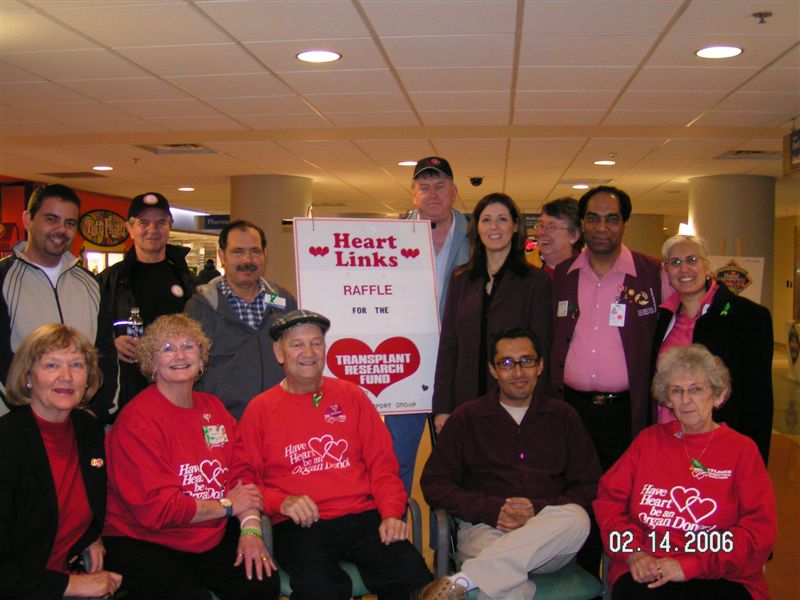
Raffle team - click for larger picture
The Valentine's Day raffle completely sold out of tickets February 14th well before the 1:30 p.m. draw. The heart transplant patient's group, HeartLinks, deserve a round of applause for the great job they did in selling raffle tickets and there was also tremendous response to the reminder about last minute ticket sales. More than 30 lucky winner's names were drawn from among the 12,000 tickets sold.*

HeartLinks gives their thanks and appreciation for the wonderful support from everyone who purchased tickets and donated prizes for this worthwhile cause. All proceeds from the more than $17,000 raised will be donated for heart transplant research at Toronto General Hospital.

*email me for a list of winners.

Wednesday, March 01, 2006

Trillium Gift of Life Network is moving to increase organ and tissue donation in Ontario

As a lung transplant recipient, it was my pleasure to give a talk on my pre and post transplant experiences to this group attending an orientation session for new staff. Included are in-hospital Clinical Coordinators and TGLN support staff. The coordinators will be available to assist on-site at the majority of hospitals in the Province of Ontario as Trillium Gift of Life Network adds to its clinical support team of Community Hospital Donation Coordinators. Initially situated in Ontario’s neurotrauma hospitals, TGLN’s In-Hospital Donation Coordinators and their on-call teams are being located in hospitals throughout the Province of Ontario to be available to assist with organ and tissue donation cases. With the implementation of the new system for organ and tissue donation in January, 2006 (RNR) TGLN has been rapidly expanding by hiring hospital coordinators and support staff to administer the program. Ontario's new system is called Routine Notification and Request (RNR) and is designed to maximize organ and tissue donation. It is a provision of the TGLN Act passed in 2000, with the implementation of the RNR program this year (2006).

Under RNR guidelines, designated facilities report to TGLN when a patient has died or death is expected by reason of disease or illness. Once eligibility has been determined, the hospital then approaches the patient or the patients' family to discuss donation options.

It's great to see the progressive steps being taken by Trillium Gift of Life Network to increase the rate of organ and tissue donation in the Province of Ontario. Currently our rate of donation in the province is about 13 donors per million population, however it is anticipated this will increase dramatically with the implementation of the new RNR program. As a note of interest, the Philadelphia area introduced a similar program several years ago and now enjoys the highest rate of organ and tissue donation in North America, 33.1 donors per million.

Please go to my photo gallery for more pictures taken at orientation sessions that I attended. This will give you an idea of how active Trillium Gift of Life Network has been in putting the staff in place to manage this new organ and tissue donation initiative: TGLN Photos

Monday, February 27, 2006

Toronto transplant doctor teaches patients how to live a full life

This inspiring story recently posted on CNN.com is a further example of how an organ transplant can transform one's life in so many ways.

TORONTO, Canada (MedPage Today) -- Dr. Heather Ross, medical director of the cardiac transplant program at Toronto General Hospital, doesn't just recommend rehab, she lives it with her patients.

What could be better rehab for a heart-transplant patient than cross-country skiing? So Ross just spent a winter weekend teaching Aaron Knox, who has a new heart, how to cross-country ski.

But there's a lot more to the story than that. Ross, 43, and Knox, 30, are going mountain-climbing together. The skiing lesson was just the first step in a challenging -- and chilly -- adventure.. full story

Friday, February 24, 2006

Another Organ Donation System Proposed for Ontario

Following Ontario's New Democrat MPP Peter Kormos' introduction of a private member's bill last week calling for presumed consent for organ donations unless the potential donor has "opted out" by previously signing a document to that effect, Conservative Frank Klees proposed a bill February 22nd that would deny driver's licenses and health cards to people 16 and older unless they signed a donor card indicating yes or no to organ donation.

So the debate on organ and tissue donation continues. My position has not changed. I believe we should give Ontario's new system, implemented by Trillium Gift of Life Network (TGLN) this past January, a chance to show that it will dramatically increase the rate of donation in our province from the present almost 13 per million population to hopefully near the rate of 33.1 per million enjoyed by the Philadelphia area. Ontario's new program is very similar to the successful Philadelphia system.

Ontario's new system is called Routine Notification and Request (RNR) and is designed to maximize organ and tissue donation. It is a provision of the TGLN Act passed in 2000, with the implementation of the RNR program this year.

Under RNR guidelines, designated facilities report to TGLN when a patient has died or death is expected by reason of disease or illness. Once eligibility has been determined, the hospital then approaches the patient or the patients' family to discuss donation options.

Do you have an opinion on this? Leave a comment below.

Tuesday, February 21, 2006

More Thoughts on Organ & Tissue Donation in Ontario

The new system that went into effect in Ontario this January, (See recent post) is very similiar to the one that's been in effect in the Philadelphia area (with a population about the same as Ontario). They have a donor rate of 33.1 per million population compared with Ontario's 13 per million. It's the most successful program in the U.S. and is called the Gift of Life.

Many readers responding to the recent post about a new system of Presumed Consent proposed for Ontario said they liked the idea, mainly because there is a shortage of tissues and organs and too many people are dying while on the waiting list for a transplant. Some quote Spain's example where over a 10 year period organ donation in Spain rose 146% to 33.6 donors per million population. People automatically assume that Spain has an "opt out" system similiar to the one proposed for Ontario. But Spain's "presumed consent" system is not enforced. In fact, Spain’s laws and practices respecting organ donation are similar to those in the U.S. and Canada. Following brain death, organs can only be retrieved after obtaining consent from the family, and no compensation can be provided for donated organs.

The increase in organ donation in Spain was not driven by statutory changes, and there has not been an increased reliance on living donors to fill the donation gap as in Canada and the U.S. Almost all – 99 percent – of organ donations in Spain are from deceased donors. Spain’s success can be attributed to the creation of the National Transplant Organization (ONT) in 1989, and its network of specially trained physicians who are paid to work as hospital transplant coordinators. These physicians work part-time as transplant coordinators while they maintain their medical practices –primarily as intensivists or nephrologists. These physicians are responsible for identifying potential donors, managing donors and approaching families.

The law in Pennsylvania stipulates that every death in a hospital must be referred to Gift of Life in order to determine if the person's organs are suitable for transplant. It is not up to medical staff – doctors and nurses – to persuade families to allow relatives' organs to be used for transplants. If there is a suitable donor, a trained co-ordinator from Gift of Life visits the hospital to seek the family's approval, but only after the attending physician has told the family the patient is dead.

The "presumed consent" or "opt out" system being proposed for Ontario doesn't sound very ethical to me. What if someone for religious reasons, for example, does not want their organs removed? They may not know of the requirement to sign a document saying they do not want their organs removed in the event of their death.

Now that Ontario's organ and tissue donation agency, Trillium Gift of Life Network, has in place a program similar to Philadelphia's in many ways, why not give it a chance to become successful with the potential to achieve the same organ and tissue donation rates? This way, families will not be taken out of the decision making and can still be involved in the donation of their loved one's organs and tissues. I think it's a win-win situation for all concerned.

Thursday, February 16, 2006

The ethics of presumed consent

A private member's bill introduced in the Ontario provincial legislature on Thursday by New Democrat MPP Peter Kormos, says that Ontario hospitals should be able to freely harvest organs unless a dying patient objects beforehand. Kormos says the aim of his bill is to reduce the number of people who die awaiting transplants.

The policy advocated in the above bill is known as Presumed Consent. Presumed Consent as public policy means that a clinically and legally indicated candidate for cadaveric organ and tissue recovery is presumed to have consented to organ and tissue recovery if he or she had not registered a refusal. Also, there is no allowance for the donor's family to be involved in the donation process.

What prompted me to write this piece was several e-mail's I received about an interview by radio personality Andy Barrie with the CEO of Trillium Gift of Life Network, Dr. Frank Markel. I did not hear the interview but was given to understand that Mr. Barrie was an advocate for the private member's bill and opposed to existing Ontario government policy.

I personally do not advocate Presumed Consent but instead like the new strategy of Trillium Gift of Life Network (TGLN) in effect in Ontario, Canada since January of this year (RNR). RNR helps identify potential donors and ensures patients/families are given the opportunity to make an informed decision about donation, thus improving current donation rates and saving more lives.

Routine Notification and Request (RNR) is designed to maximize organ and tissue donation in Ontario. It is a provision of the TGLN Act passed in 2000, with the implementation of the RNR program in January 2006.

Under RNR guidelines, designated facilities report to TGLN when a patient has died or death is expected by reason of disease or illness. Once eligibility has been determined, the hospital then approaches the patient or the patients' family to discuss donation options.

Some countries have increased organ and tissue donation rates through a "presumed consent" policy, such as Belgium, France, Austria, Finland, Denmark and Singapore but their policies approximate "routine salvaging of organs".

Our society assumes that the individual, not the state, should control his or her physical disposition. Our society respects this principle by asking for the consent of the donor before organs are recovered.

This is my opinion. You can find many other opinions elsewhere and the best discussion I've read on this is in "A Report of the Presumed Consent Subcommittee, United Network for Organ Sharing Ethics Committee."

Please go the following link for this in depth analysis: Evaluation of the Ethics of Presumed Consent

Do you have an opinion on this? Leave a comment below.

Saturday, February 11, 2006

Smokers who exercise reduce risk of heart attack

This news release from the University of Texas could be very helpful for those who want to quit smoking but just cannot do so right away.

AUSTIN, Texas—February 8, 2006

Even if you cannot stop smoking, you can lower your risk of cardiovascular disease by exercising regularly, according to a University of Texas at Austin study.

Examining otherwise healthy sedentary smokers and physically active smokers, Dr. Hiro Tanaka, an exercise physiologist in the College of Education, discovered that the smokers who exercised had increased blood flow to the legs.

Cigarette smoking causes a distinct, immediate decrease in blood flow to the legs because blood vessels going to the legs become constricted. Over time, this can lead to peripheral artery disease and increases the risk of heart attack, stroke, amputation or death..Full news release

Thursday, February 09, 2006

Birthday Ball Wednesday, April 26, 2006 (update)

Mark your calendars and be sure to attend the next Birthday Ball to celebrate life through transplant excellence. The Birthday Ball will be held at The Carlu, 444 Yonge Street, 7th floor, Toronto, Wednesday evening, April 26, 2006. (This is the original Eaton Auditorium in College Park that has been completely restored..Carlu web site)

The Birthday Ball is being organized by Team For Transplant under the auspices of Toronto General & Western Hospital Foundation. Last year's event netted $145,000 with about 500 attendees and this year organizers are expecting an attendance of 600.

Funds raised are directed to the Transplant Program and as Birthday Ball co-chairs Brenda Hunter and Pamela Collins say in the web site's welcome message:

"By supporting the Birthday Ball you will be contributing to the efforts of researchers and clinicians who are making new advances in transplantation research and treatment thereby ensuring their patients and future transplant recipients can enjoy the best quality of life and receive a second chance at life."

For tickets and other information: Birthday Ball Web Site
or call Mary-Claire Jankowski at 416.340.4800 ext. 6279.


The above site has a link to photos from last year's ball and there is also a collection of photos on Merv's Birthday Ball Gallery taken by me and other volunteers.

I hope to see you there.

Tuesday, February 07, 2006

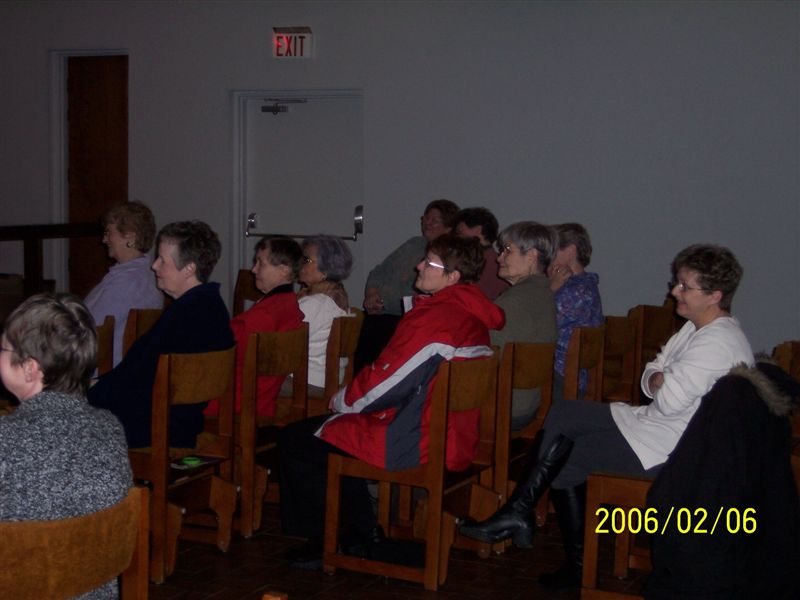
Church members brave storm to hear about organ and tissue donation

Merv Sheppard, speaker and Gloria Clarke About thirty members of the Church of The Holy Spirit in Mississauga, Ontario turned out to hear our organ and tissue donation story Monday evening in spite of a sudden winter storm that hampered visibility and made driving tricky. The audience was very attentitive and asked numerous questions. Many said they were unaware there were no age limits to donating organs and most tissues or the types of organs and tissues that could be donated. We distributed donor cards during the meeting and later during the social that followed several people came up to me proudly showing they had filled out and signed their's. Thanks to church member Gloria Clarke (shown with me in the photo) for organizing the event and giving Trillium Gift of Life Network an opportunity to bring our message to their congregation.

Audience I owe a huge vote of thanks to Lynne and Peter Laurence (double-lung transplant recipient due to cystic fibrosis) for their help and support. Not only did they drive me to this meeting from their home in Mississauga and help distribute materials, but they took me home and put me up for the night so I wouldn't have to drive back to Waterloo in the snowstorm. (That's Lynne in white in the last row)

Sunday, February 05, 2006

Another snow day in Waterloo


Here's what greeted me when I looked out my kitchen window this morning. Last week friends were talking about golfing this weekend but the good old weatherman put a damper to that pretty quickly. So I guess I'll either go cross-country skiing or stay in and watch the Super Bowl. Now let's see...hmmmm..

Saturday, February 04, 2006

Do you care about your doctor's appearance?

I've never really thought about how my doctors look. I guess my main concern has always been dealing with my health problems and getting them taken care of. But this study published in the British Medical Journal seems to indicate that many patients do care about how their physicians look and interract with them. Do you have an opinion on this? If so, you are invited to leave a comment at the end of this post. It will be interesting to see what everyone has to say. I've provided a link to the full study but here's an extract:

Results
Patients preferred doctors to wear semiformal attire, but the addition of a smiling face was even better. The next most preferred styles were semiformal without a smile, followed by white coat, formal suit, jeans, and casual dress. Patients were more comfortable with conservative items of clothing, such as long sleeves, covered shoes, and dress trousers or skirts than with less conservative items such as facial piercing, short tops, and earrings on men. Many less conservative items such as jeans were still acceptable to most patients. Most patients preferred to be called by their first name, to be introduced to a doctor by full name and title, and to see the doctor's name badge worn at the breast pocket. Older patients had more conservative preferences... BMJ full article

Friday, February 03, 2006

Introduction to Molds

From time to time we hear about lung disease patients who experience respiratory problems from living in environments such as damp basements and hopefully this U.S. Enviornmental Protection Agency review of molds and how they develop will be helpful.

Molds produce tiny spores to reproduce. Mold spores waft through the indoor and outdoor air continually. When mold spores land on a damp spot indoors, they may begin growing and digesting whatever they are growing on in order to survive. There are molds that can grow on wood, paper, carpet, and foods. When excessive moisture or water accumulates indoors, mold growth will often occur, particularly if the moisture problem remains undiscovered or un-addressed. There is no practical way to eliminate all mold and mold spores in the indoor environment; the way to control indoor mold growth is to control moisture.

Basic Mold Cleanup

The key to mold control is moisture control. It is important to dry water damaged areas and items within 24-48 hours to prevent mold growth. If mold is a problem in your home, clean up the mold and get rid of the excess water or moisture. Fix leaky plumbing or other sources of water. Wash mold off hard surfaces with detergent and water, and dry completely. Absorbent materials (such as ceiling tiles & carpet) that become moldy may have to be replaced.

How do molds affect people?

Some people are sensitive to molds. For these people, exposure to molds can cause symptoms such as nasal stuffiness, eye irritation, wheezing, or skin irritation. Some people, such as those with serious allergies to molds, may have more severe reactions. Severe reactions may occur among workers exposed to large amounts of molds in occupational settings, such as farmers working around moldy hay. Severe reactions may include fever and shortness of breath. Some people with chronic lung illnesses, such as obstructive lung disease, may develop mold infections in their lungs.

Ten Things You Should Know About Mold

Asthma and Mold

For the full article go to: Mold Resources

Thursday, February 02, 2006

I had a great time in Toronto last night!

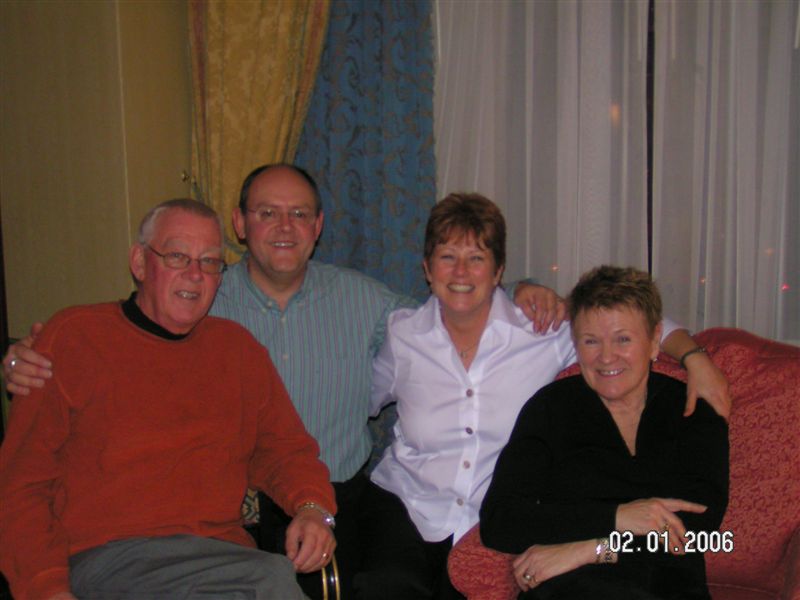
Christine & Merv SheppardJust how important family is to someone's life really hits home when you have a chance to get together with loved ones you don't see regularly. It was wonderful to have a visit with my daugher Christine yesterday. She is staying at the Royal York Fairmont Hotel in downtown Toronto this week to attend a convention (she's Executive Director of the Alberta Library Association). Many of my fellow lung transplant recipients and their supports will remember Chris because she flew in from Calgary to be my support for five weeks post transplant. She gives her regards and says hello to everyone.

Bob, Gary, Chris, Fran Chris and husband Gary, my brother Bob (another support person for me) his wife Fran and I went out for a fabulous dinner at Joe Badali's, an Italian restaurant just west of the Royal York on Front Street. The service and attention to our party was terrific and the food was delicious. A good time was had by all except I'm a bit tired today because my head didn't hit the pillow back here in Waterloo until almost 2 a.m..But it was well worth it! (this picture was taken in Chris & Gary's suite at the hotel)

Wednesday, February 01, 2006

Smokers Double Their Quit Rate By Wearing Nicotine Patch Before Stopping

This might be welcome news for anyone who is trying to quit smoking.

02/01/2006
DURHAM, N.C. – Smokers trying to quit the habit may double their success rate by wearing a nicotine patch two weeks before their actual quit date, according to a Duke University Medical Center study. Currently, the patch's label warns against smoking while wearing the patch.

In a study of 96 smokers attempting to quit, 50 percent of those who wore the patch two weeks prior to quitting had stopped at four weeks. Only 23 percent of smokers who wore a placebo patch two weeks prior to quitting had stopped after four weeks. The same pattern appeared to continue for six months, although many of the study participants were no longer reachable to verify this trend, said the researchers.

If these findings are confirmed by a larger study currently underway, the researchers said the Food and Drug Administration may need to re-evaluate its current warning against smoking while wearing the nicotine patch. Moreover, said the researchers, such confirmation would lead them to advocate a change in clinical practice in smoking cessation programs, to include use of the patches before cessation...Full news release